Where should you mount an RV inverter?
6 min read

As close to the battery as the layout allows, and somewhere with moving air. Distance costs voltage on the DC side, and an inverter that cannot shed heat will derate or shut down exactly when the load is heaviest. Look for a dry, clean, ventilated space with clear room in front of the fan and vents, away from heat sources such as an exhaust or a cooker. The published outer temperature limit for this range is 50 °C, which is the air around the unit, not the temperature inside a closed locker.
Short DC runs and moving air
These are the two constraints, and they usually can be satisfied at the same time. The battery compartment is usually the wrong place for the inverter, because it is where the DC run is shortest and the air is often stillest and warmest. Something adjacent to the battery — a locker wall, the space under a seat with a vent — is normally the compromise that satisfies both.
What a sealed locker does to an inverter
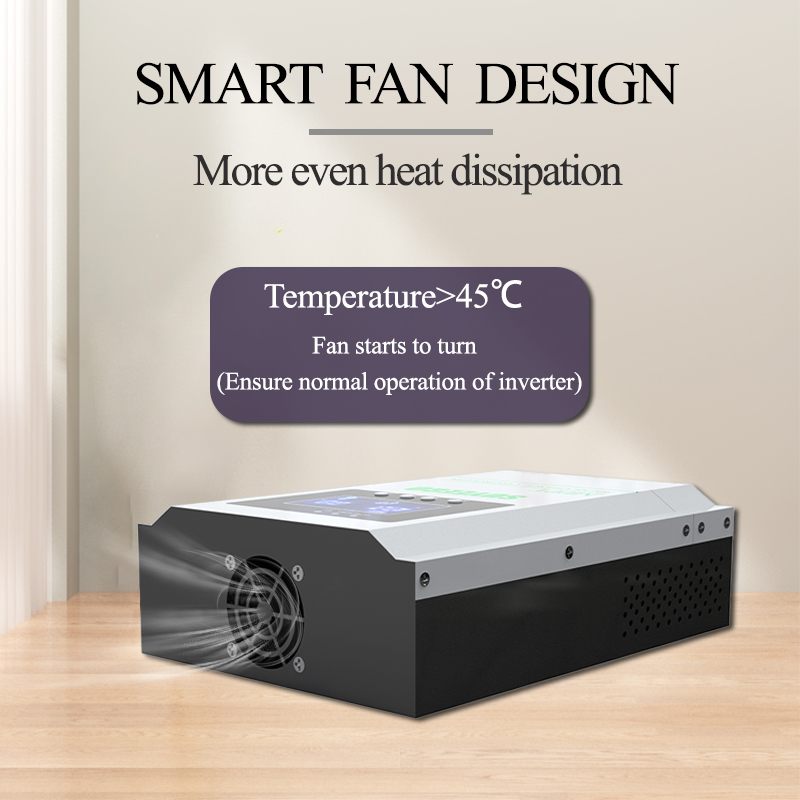
An inverter's losses appear as heat, and a large unit at high load produces a meaningful amount of it. In a closed locker the air around the unit warms until the heatsink can no longer shed anything, and the protection then reduces output or shuts the unit down. The pattern is easy to recognise: it works for ten minutes and then stops, and it works all day in cool weather.
Noise, dust and damp
- Fan noise is proportional to load, so mounting the unit away from a sleeping area is worth more than a quieter model.
- Dust and fluff clog vents over seasons. Where the vents are accessible for cleaning is part of choosing the location.
- Damp lockers corrode terminals. If the compartment is not dry, it is the wrong compartment.
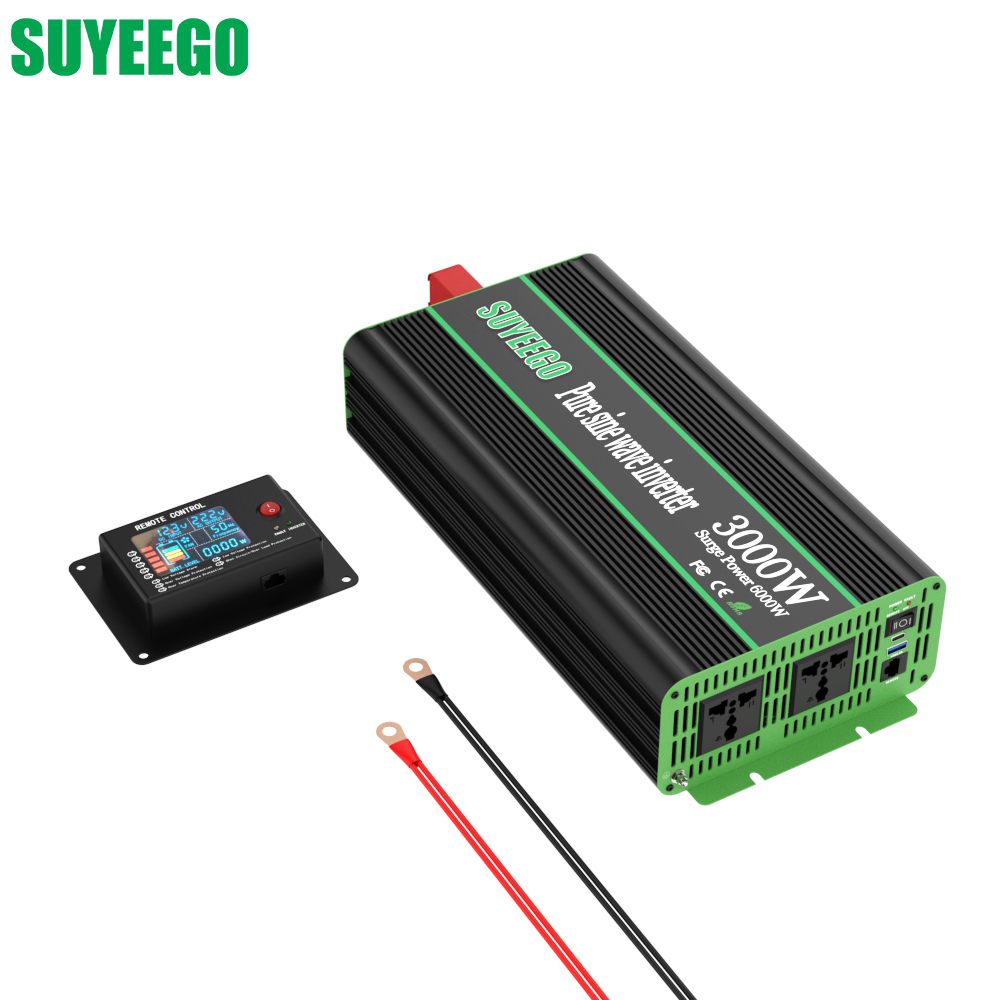
- A remote display means the unit can sit somewhere convenient to ventilate while the readings stay where you can see them.
Where not to mount it
- Directly above a battery that vents, or in a sealed box with one, because both are heat sources.
- Where exhaust, engine or heater ducting passes within a short distance.
- In a locker with no permanent opening for air, even if the door is often left ajar.
- Flat against a surface that blocks all but one side of the unit.
What the range publishes
The SYGG-FSC range publishes a maximum outer temperature of 50 °C with minimum of −10 °C, a built-in large radiator and cooling fan, staggered battery terminals to simplify the heavy wiring, and an intelligent warning system with remote control and colour screen — the reason the unit can be mounted out of sight while its readings stay visible. Output is 110V or 220V with 50Hz or 60Hz on request, from 12V or 24V DC input.
Frequently asked questions
- Can I mount an inverter in the same locker as the battery?
- Only if that locker is properly ventilated and dry. Batteries and inverters both give off heat, and a sealed compartment holding both is the classic way to make an inverter overheat on a summer day.
- How much clearance does the fan need?
- Enough that air can leave the vents and is not drawn straight back in. A clear space in front of the vents, with some volume around the unit to draw from, is the principle; the installation instructions for the specific model give the exact figures.
- Does the inverter have to be near the battery?
- As near as is practical. Voltage drop on the DC side rises with the length of the run, so a long cable means the inverter sees a lower voltage than the battery is delivering, and it will reach its low-voltage alarm sooner under load.
- Can I mount it upside down or on its side?
- Follow the manufacturer's stated orientation. A unit with a fan and vents is designed around a particular airflow path, and mounting it so that heat gathers behind the heatsink works against it even if the fixings allow it.