Can you run an RV air conditioner on solar power?
7 min read
An air conditioner can be run from a solar system, but it is the largest load most RVs will ever ask of one. A rooftop unit draws roughly 1,000–2,000W while its compressor is running, and several times that for a second or two as the compressor starts, so the inverter has to cover the surge and the battery has to supply the current. On a 12V bank a sustained 1,500W load draws around 140A once the inverter's own losses are counted, which is why air conditioning normally comes with a 24V or 48V bank and a battery of 400Ah or more. Solar can offset that consumption, but an array large enough to run an air conditioner outright rarely fits on a vehicle roof.
What an air conditioner actually asks for
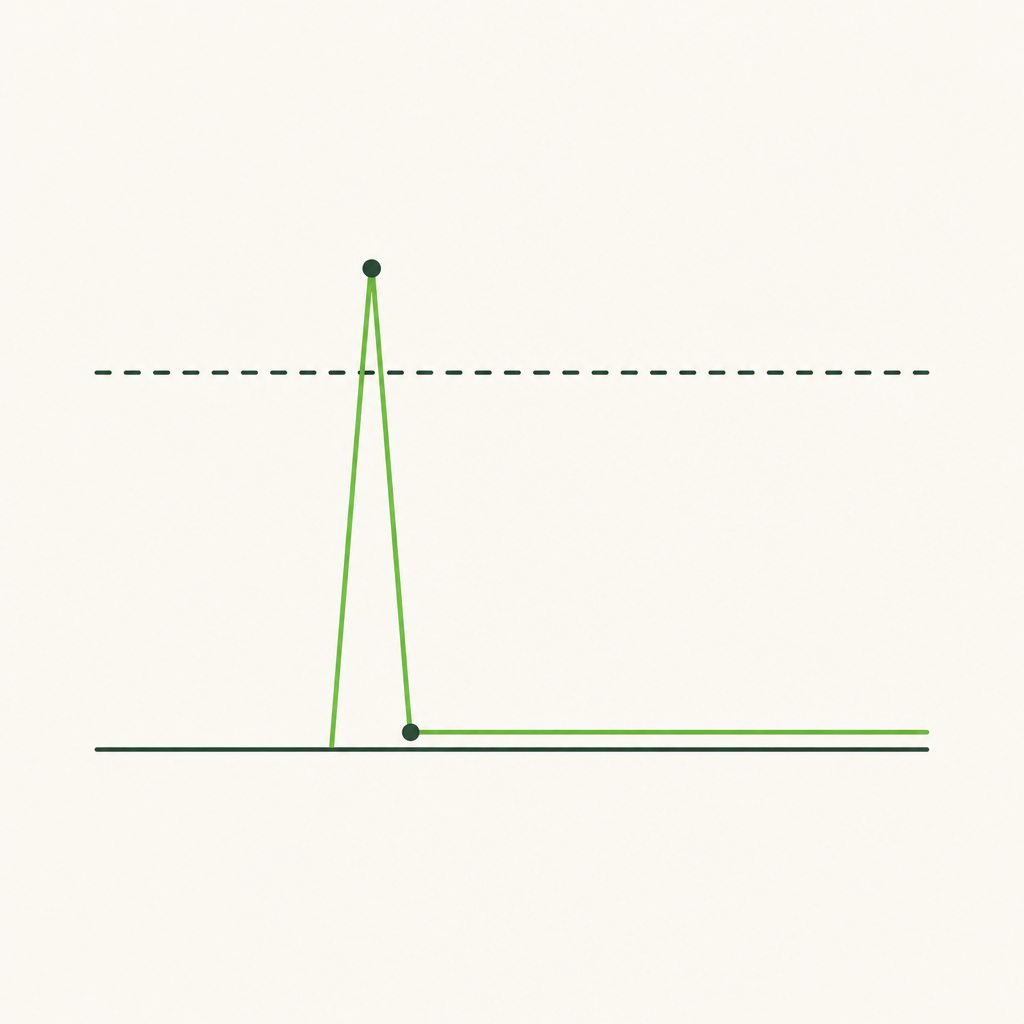
An air conditioner is a compressor with a fan attached, and the compressor is what makes it different from every other appliance on board. Its running draw is modest by the standards of heating appliances, but a motor takes its heaviest current in the first second or two, before it is up to speed, and that moment is what the inverter and the battery are really being asked to survive.
| Unit | Running draw | Start-up surge |
|---|---|---|
| Rooftop unit, 230V | 1,000–2,000W | Two to three times the running figure |
| Portable unit, 230V | 700–1,200W | Two to three times the running figure |
| 12V compressor unit | 200–600W | A motor start, but a smaller one |
| Fan only | 50–100W | Negligible |
The compressor does not run continuously either. It cycles: it runs until the thermostat is satisfied and then stops, so the average draw over an hour is lower than the figure on the rating plate. That is what makes air conditioning possible on a battery at all, and it is also why the arithmetic below starts from the running figure and is then adjusted for how hard the unit has to work in your climate.
The battery has to carry it, not just the inverter
Inverter output is measured in watts but the battery supplies amps, and converting between the two is what shows whether a plan is realistic. A 1,500W load on a 12V bank draws about 125A at the terminals, and closer to 140A once the inverter's conversion losses are included. That is the figure the cable, the fuse and the battery's own discharge rating all have to survive.
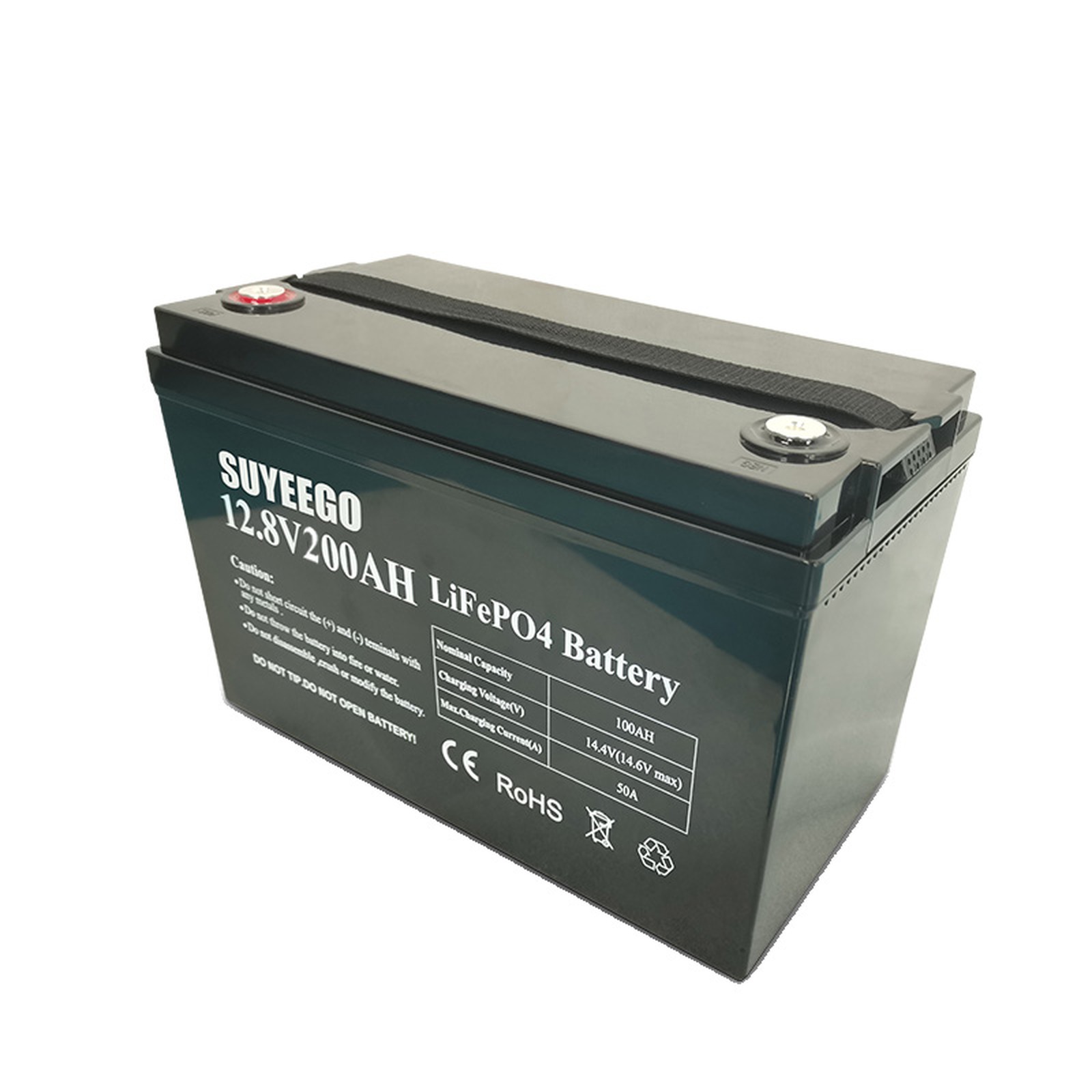
Runtime then follows the energy in the bank. A 12.8V 200Ah LiFePO4 battery holds 2.56kWh, and around 2.3kWh of that is usable at the depth of discharge a lithium battery tolerates. Running a 1,500W air conditioner without a break would empty it in well under two hours. Because the compressor cycles instead of running flat out, the real figure is longer than that, but it is hours rather than days — which is the whole reason air conditioning on the battery alone is a daytime activity.
- A 1,500W load at 12V pulls roughly 140A. Fewer batteries than people expect can supply that continuously, and the cable and fuse have to be rated for it as well.
- Every inverter has a low-voltage cut-off, so the last of the battery's capacity is never used and the real runtime is a little shorter than the arithmetic suggests.
- Voltage sag under that current is real. A heavily loaded 12V bank can dip far enough to alarm long before the battery is flat, which is the practical argument for a higher bank voltage.
- Air conditioning is the load that turns a 200Ah battery from a comfortable day of supply into about an hour and a half.
Why the bank voltage changes the answer
The same 1,500W load draws about 140A from a 12V bank and about 70A from a 24V one, so stepping up halves every number that makes air conditioning difficult: the cable cross-section, the fuse, the heat in the terminals and the voltage sag under load. It does not create more energy. It lets the same energy move through hardware that is practical to install.
- A 24V bank cannot run a 12V inverter. The inverter is ordered for one input voltage or the other, so that decision is made before the rest of the system.
- Everything charging the bank has to match it. A DC-DC charger for a 24V bank is a different unit from the 12V version, and the solar controller has to be specified for the bank voltage or to detect it.
- A few 12V accessories will need a step-down converter, though lights, fridges and chargers are commonly available in both voltages.
- Above roughly 3kW of inverter, 48V is the usual next step, for the same reason 24V helps at 1–2kW.
How much solar it would take
Size the array from the energy the air conditioner uses in a day, not from its running watts. If the unit runs for about half the time across an eight-hour afternoon, that is roughly four hours of running at 1,500W, or 6kWh — a figure several times larger than the rest of the van's consumption put together.
| Daily energy for air conditioning | Array at 3 peak sun hours | Array at 5 peak sun hours |
|---|---|---|
| 3kWh | about 1,300W | about 800W |
| 6kWh | about 2,700W | about 1,600W |
Both columns are larger than a van roof usually carries. Flexible panels from 50W to 230W make efficient use of a curved roof, but a roof's worth of them is typically 400–800W. That is the honest conclusion: solar will offset air conditioning on a sunny day and reduce how often the batteries need recharging from somewhere else, but it will not run an air conditioner outright unless the roof is very large and the climate very sunny.
Making it work in practice
- Run the air conditioner during the sunniest hours, when the array is covering the load directly rather than the battery absorbing it.
- Choose an inverter whose peak rating covers the compressor's start-up surge, not just its running draw.
- Check the battery's continuous discharge rating against the current the inverter will pull, rather than against its capacity.
- Keep the DC cable run short and heavy. At these currents a few metres of undersized cable drops enough voltage to matter.
- Reduce the heat the unit has to remove: shade the vehicle, insulate it and keep the interior closed during the hottest part of the day.
- While driving, the alternator through a DC-DC charger can carry part of the load, which is often the most practical way to run air conditioning at all.
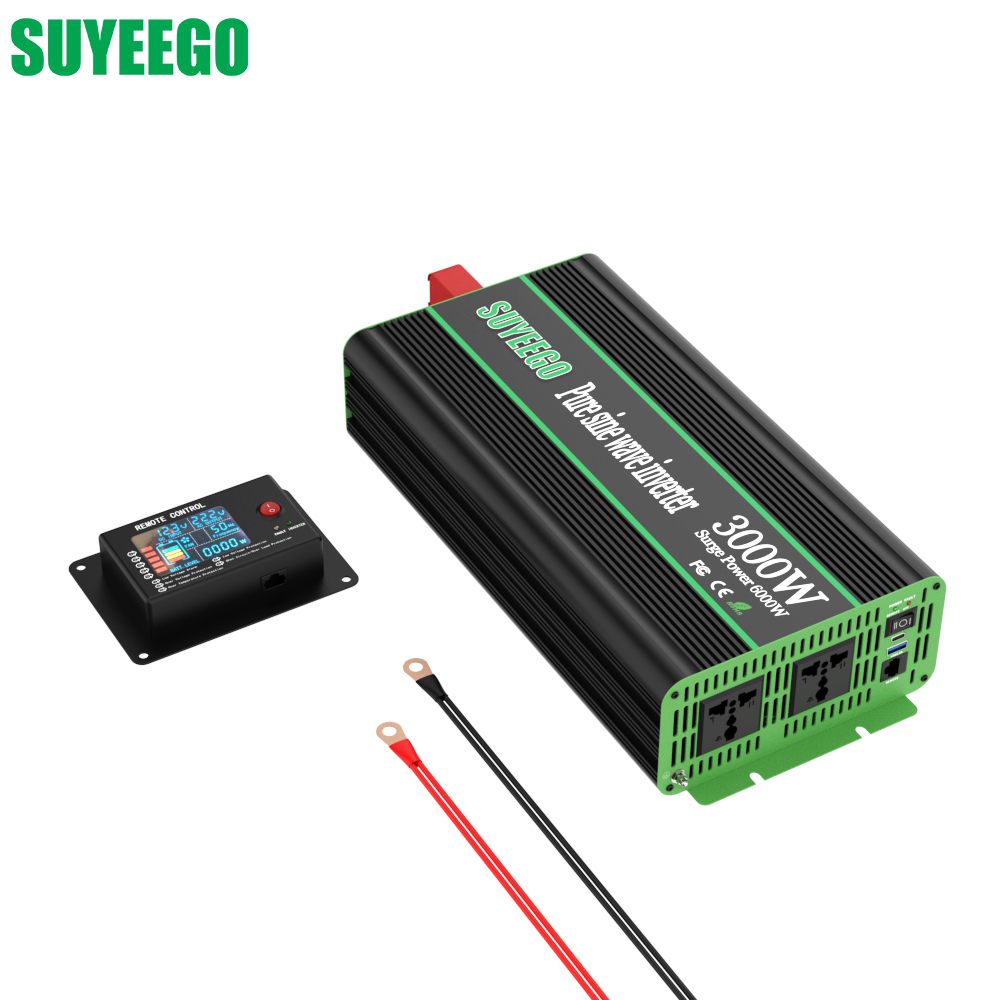
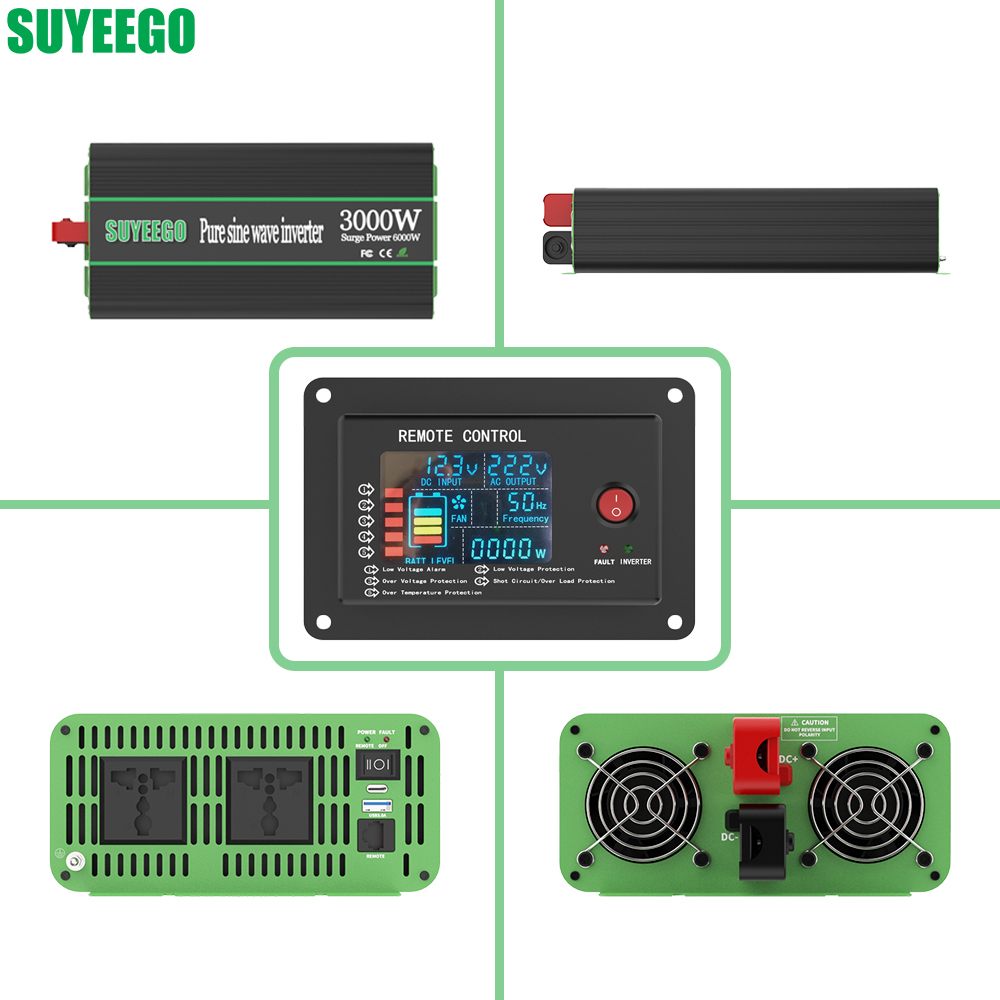
SUYEEGO's pure sine wave inverters run from 1kW to 3kW, each available for a 12V or a 24V bank, and every model is rated at twice its continuous figure for the few seconds a compressor needs — a 3000W unit will cover a 6000W start-up surge. The 12.8V 200Ah LiFePO4 battery in the range stores 2.56kWh and is rated for 200A of continuous discharge, which is the battery-side figure this calculation produces. Send us the rating plate watts of the unit you are fitting and we will work out which inverter and how many batteries it actually needs.
Frequently asked questions
- Can a 2000W inverter run an air conditioner?
- A 2000W continuous inverter can start and run a unit drawing up to roughly 1,500W, but the battery side is usually the binding constraint. At 12V a 2000W load draws about 185A once losses are counted, so the bank, the cable and the fuse all have to be rated for that current. On a 24V bank the same load draws about half.
- How long can I run an air conditioner from a 200Ah battery?
- A 12.8V 200Ah lithium battery holds 2.56kWh, of which roughly 2.3kWh is usable. An air conditioner running continuously at 1,500W would empty that in about an hour and a half, and because the compressor cycles the wall-clock time is longer than that — but it is measured in hours, not days.
- How much solar do I need to run an air conditioner?
- Work from the daily energy rather than the running watts. An air conditioner using 6kWh a day needs roughly 2,700W of array in a location with three peak sun hours, or about 1,600W with five. A van roof typically carries 400–800W, which is why solar usually offsets air conditioning rather than covering it.
- Why does my inverter shut down when the air conditioner starts?
- Because the compressor's start-up surge is far higher than its running draw, and a heavily loaded battery bank also sags under the current that surge demands. An inverter sized only for the continuous figure trips at that moment; one with a peak rating two to three times the running load rides through it.