How do I wire an RV solar system?
8 min read
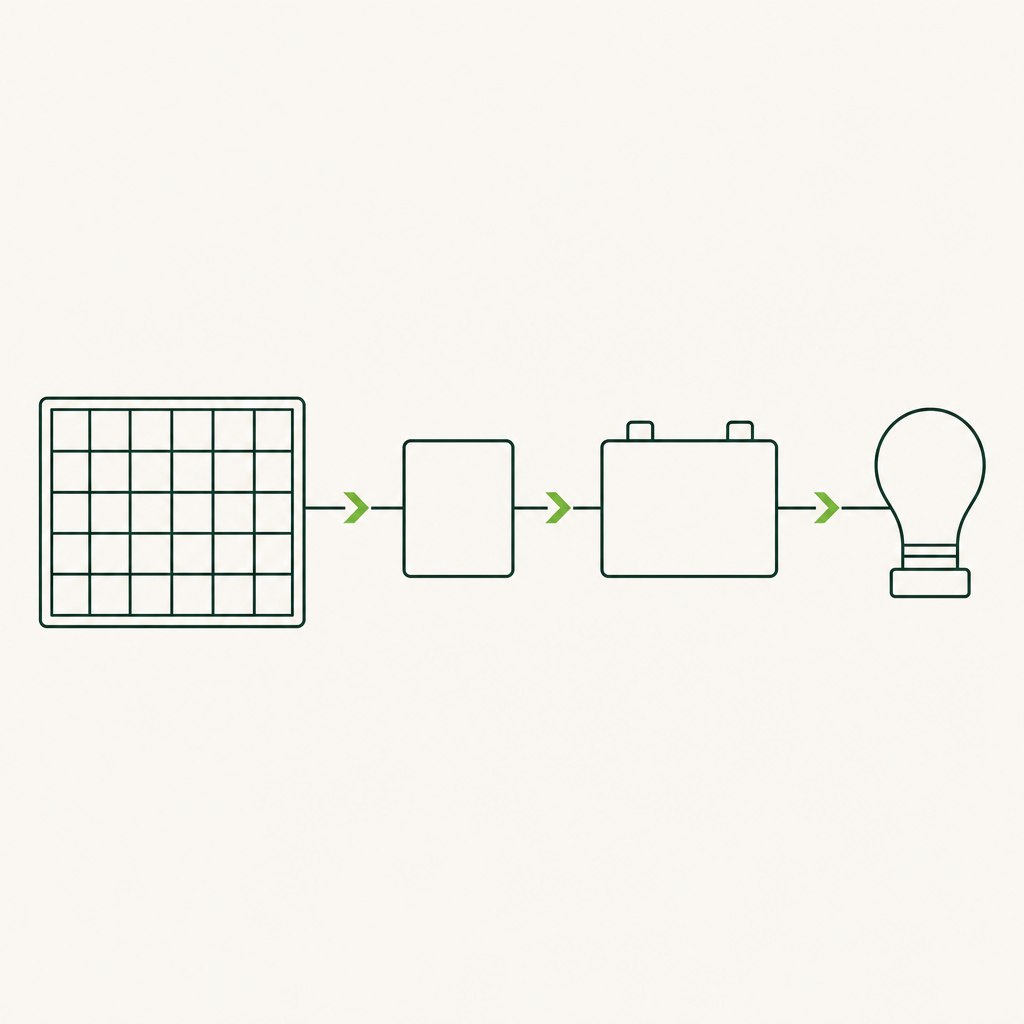
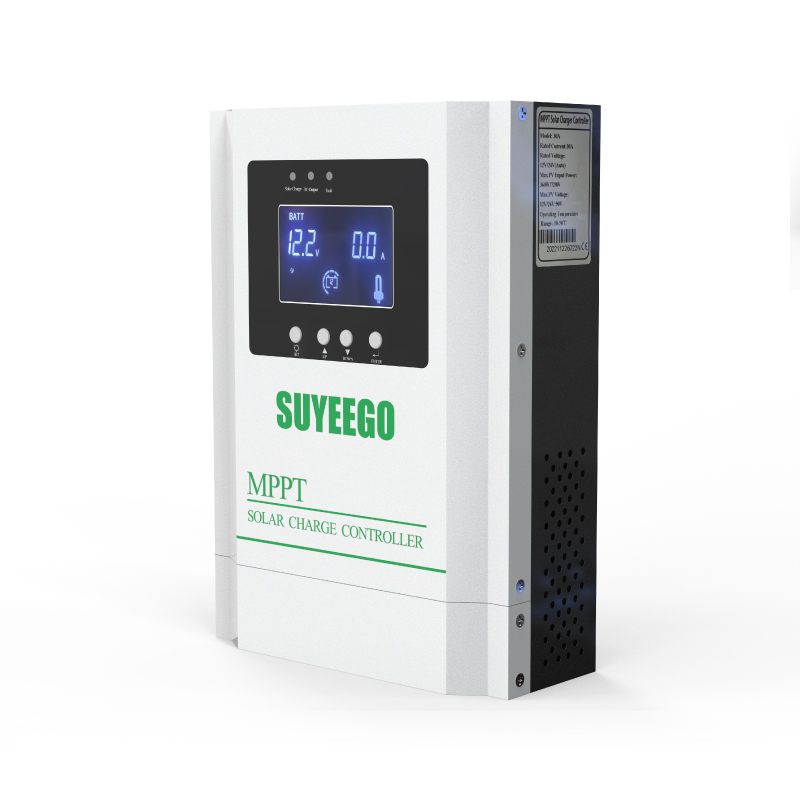
Connect the battery to the charge controller first and the array to the controller second, and disconnect in the reverse order: array off first, battery last. The battery is what the controller reads to recognise its own voltage, so it has to be present before the panels are, and connecting an array to a controller with no battery attached is one of the ways controllers are destroyed. Every positive cable leaving the battery should pass through a fuse mounted close to the terminal, rated below what the cable itself can carry.
The order is not a preference
A charge controller has to decide what voltage it is charging. It makes that decision by looking at the battery. Bring the array online first and the controller sees the array's open-circuit voltage instead, which on a cold morning can be two or three times the battery's, and it may configure itself wrongly or not start at all.
- Connect: battery to controller first, then controller to array.
- Disconnect: array from controller first, then controller from battery.
- Cover the panels or work after dark before touching the array side. A panel that is simply lying in daylight is already producing voltage.
- Label both ends of every cable as you go. The controller cannot tell you which cable came from the array once they are all behind the same panel.
Fuse at the battery, not at the appliance
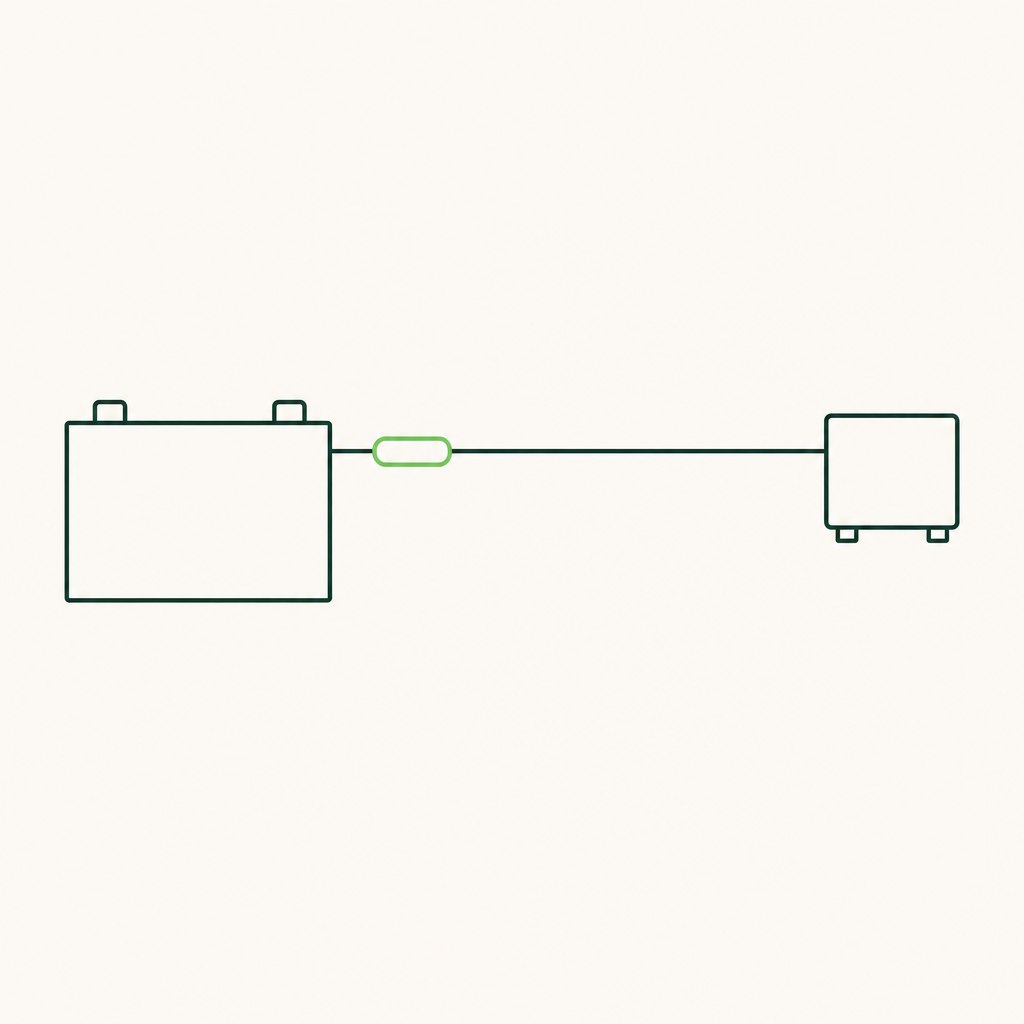
A fuse protects the cable, not the appliance. Its rating goes above the maximum current the load will draw, so it does not blow in normal use, and below the current the cable can carry continuously, so that the fuse is what fails when something goes wrong. Mounting it at the appliance end leaves the length of cable between the battery and the appliance unprotected, which is the length most likely to be damaged.
Fit one for every positive cable that leaves the battery, including the feed to the controller. A short cable is not automatically a safe one: a battery can deliver far more current than any fuse you would choose, and it will do so through a cable that has been crushed against a chassis rail.
Cable, terminals and torque
- Choose the cable for the current it carries and the length of the run. Voltage drop grows with both, and at 12V a small drop is a large fraction of the supply.
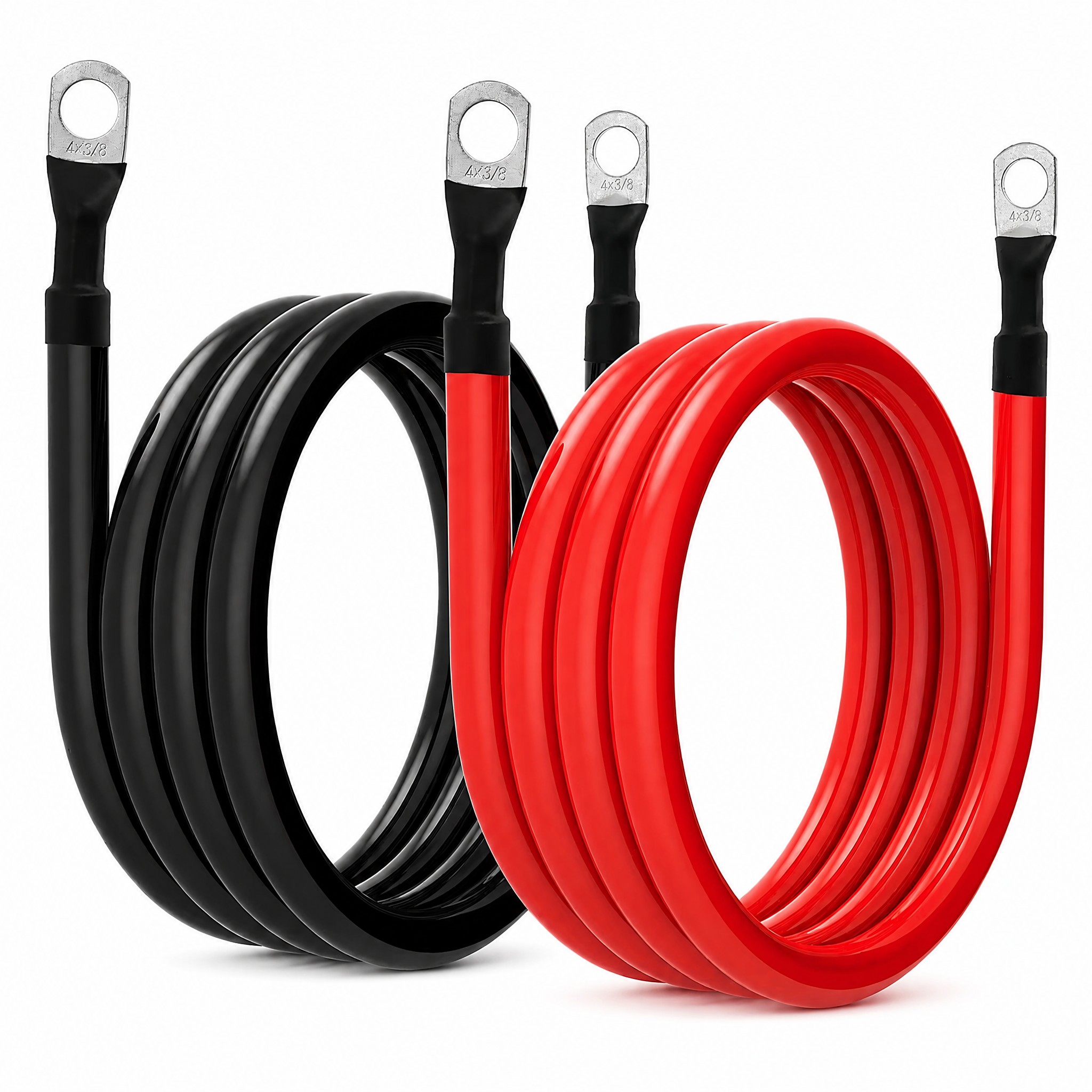
- Crimp high-current joints rather than soldering them, and cover the barrel of the lug with heat-shrink so the strands cannot move and moisture cannot reach the joint.
- Re-check the torque on battery and busbar terminals after the first few heat cycles. A joint that was tight when cold can be loose once it has warmed and cooled again.
- Keep the run from the battery to the controller as short as the layout allows, and route it away from anything that can chafe it.
Check it before you trust it
Before the array is connected, check the polarity at the controller terminals with a meter, and confirm the battery voltage the controller reports matches what you measured at the battery. Once the array is connected, watch the current figure for a few minutes in good light — a reading that is far below what the array should produce usually means a connection rather than a failed panel.
SUYEEGO supplies battery cable in 4 AWG with 3/8 inch ring terminals and heat-shrink already fitted. Match the gauge to the current the cable will actually carry before ordering — the fuse and cable sizing guide on this site works that figure out from the load.
Frequently asked questions
- Can I connect the panels to the controller before the battery?
- No. With no battery connected the controller has nothing to read its voltage from, and it may try to charge against the array's open-circuit voltage instead. Connect the battery first every time, and disconnect it last.
- How do I know the array is switched off?
- There is usually no switch, so treat the array as live whenever there is daylight. Cover the panels with something opaque, or work after dark, and disconnect at the array end of the cable before touching the controller terminals.
- Where exactly should the fuse go?
- On the battery positive, as close to the terminal as the cable routing allows. The idea is that the length of unfused cable is as short as possible, because that is the section a fault is most likely to involve.
- Does it matter which panel goes first in the chain?
- Not for the wiring order, but it matters for the string. Panels in series should be the same model, because the string's current is set by the weakest one, and a single shaded panel in a series string pulls the whole string's output down with it.