What size solar charge controller do I need?
6 min read
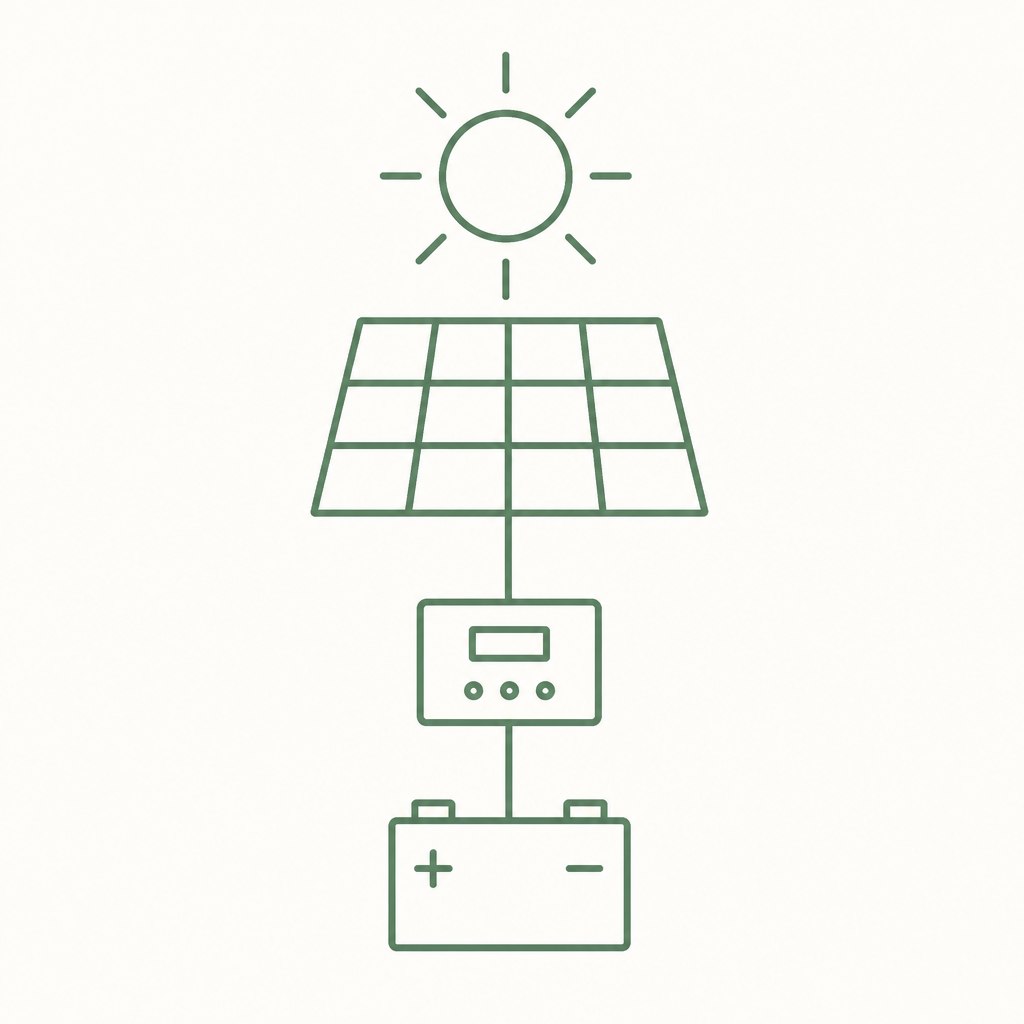
A charge controller is sized from two limits on the array: the maximum voltage it can accept and the maximum current it can pass. The voltage limit is absolute — exceeding it damages the controller immediately — and cold weather raises a panel's open-circuit voltage above its rated figure, so the string has to be checked at the coldest temperature it will see, not at room temperature. The current limit is the array's short-circuit current, and it decides how much of the array's output the controller can actually put into the battery. A controller is the one component where oversizing the array is dangerous rather than merely wasteful.
Two limits, and only one is forgiving
A controller has a maximum voltage it can accept and a maximum current it can pass, and the two behave very differently when you exceed them. Too much current is a thermal problem: the controller gets hot and, at worst, protects itself or throttles what it passes. Too much voltage is not a thermal problem at all. It breaks down the components inside the controller immediately, and there is no margin at the moment it happens — an array that is fine on a warm day can push the voltage past that limit on a cold one.
Why cold mornings matter
A panel's open-circuit voltage rises as its temperature falls, so the figure on the datasheet, measured in comfortable conditions, is not the highest voltage the array will ever present. The coldest morning the panels will see is the one that decides whether the controller survives, which means the string's open-circuit voltage has to be checked at that temperature rather than at room temperature. The effect is largest for a series string, where the individual panels' voltages add together.
Current, and how much reaches the battery
The current limit is the second rating, and it governs how much of the array's output the controller can actually put into the battery. Compare it with the array's short-circuit current, which is the highest current the panels can produce under full sun, and leave headroom because a cold, clear day can push a panel above its nameplate output. A controller that is undersized here does not fail dramatically; it simply clips the array, so the panels are capable of more than the battery ever receives.
Where the controller sits in the system
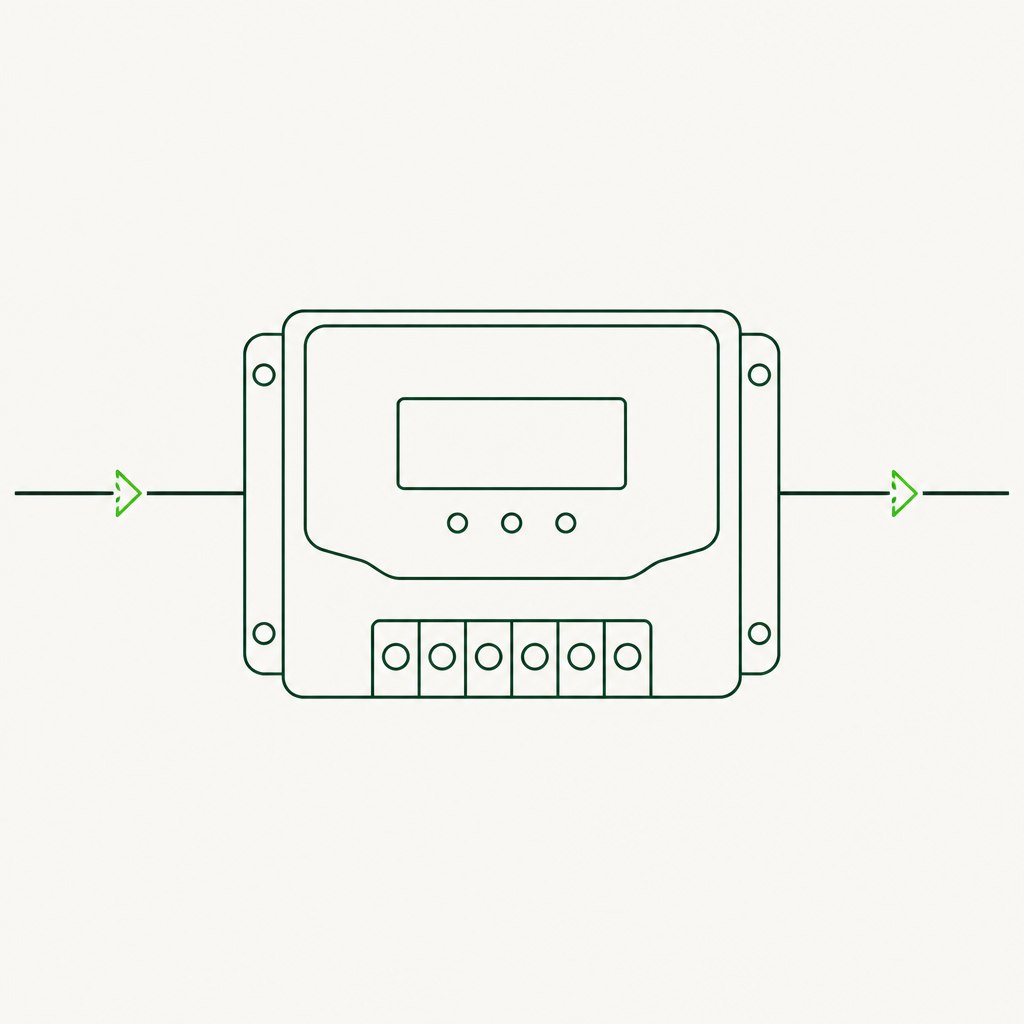
- The array terminals take the panels. This is the input the voltage limit applies to.
- The battery terminals connect to the battery, and this is the output the current limit is really about, because it is the current that has to reach the battery.
- The load terminals are optional. They let the controller switch a small DC load and, on some models, protect the battery from being over-discharged.
- Not every system uses the load output. If the appliances are wired straight to the battery, the controller only needs the array and battery connections.
Frequently asked questions
- Can I connect a bigger array to my controller?
- Up to a point. The array's short-circuit current must stay within the controller's current rating, and its open-circuit voltage at the coldest expected temperature must stay below the maximum input voltage. A larger array within those limits is usually fine and simply gives more output in good conditions; beyond them, the extra panel capacity is wasted or the controller is put at risk.
- What happens if the array voltage is too high?
- The controller can be damaged immediately and permanently. The voltage limit is absolute rather than a working range, so it has to be checked against the array's open-circuit voltage at the coldest temperature it will see, not against its rated figure, because panel voltage rises as temperature falls.
- Do I need a charge controller for a small trickle panel?
- A very small panel that cannot raise the battery above its safe voltage may manage without one, but the moment the panel is large enough to overcharge the battery on a sunny day, a controller is needed. The controller's job is to stop the battery being overcharged, and that job scales down with the panel rather than disappearing.
- Why does my controller show less power than the panels are rated for?
- Panel ratings are measured under standard test conditions that a real roof rarely reproduces. Heat, a flat mounting angle, cable losses and the controller's own conversion losses all take a share, and a partly shaded or dirty panel loses more still. The controller reporting less than the nameplate figure is normal; it is only a problem if the shortfall is large and persistent.