How do you fuse a lithium battery bank?
6 min read
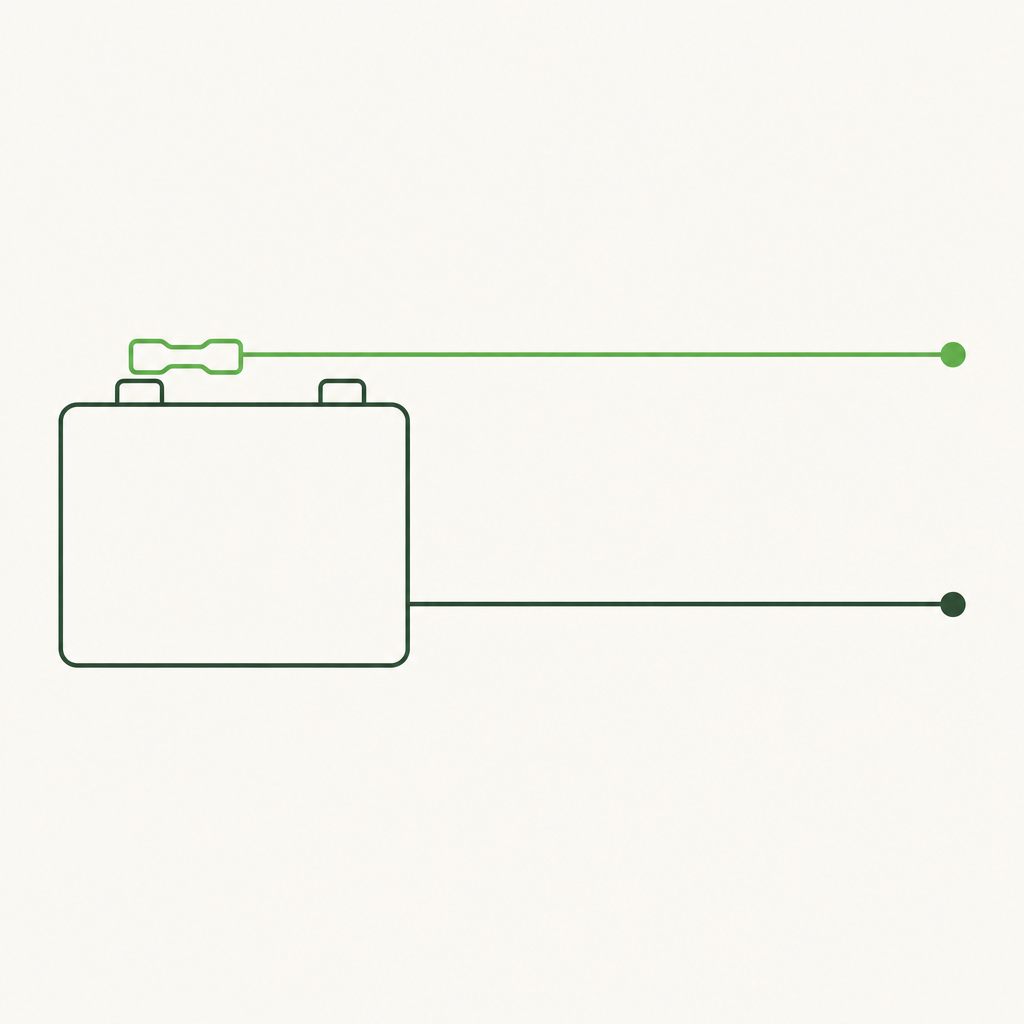
The main fuse belongs on the battery's positive cable, as close to the terminal as the mounting allows, and it has to satisfy three things rather than one: the current the system will actually draw, the DC voltage of the bank, and the fault current the battery can deliver. On a lithium bank that third figure is what makes the choice different from a lead-acid installation, because a LiFePO4 battery can push a very large current into a short circuit and the fuse is the part that has to stop it. A battery's own management system does not replace the fuse: a BMS protects the cells during normal operation, and it is not a substitute for a passive device whose only job is to open a faulted circuit.
Where the fuse goes
The position matters as much as the rating. A fuse protects the cable downstream of it, so any cable between the battery's positive terminal and the fuse has no protection at all — if it chafes through or its insulation is damaged, the battery will feed the fault directly. Keeping that unprotected length as short as the mounting allows is the whole reason the fuse is fitted at the battery rather than at the distribution block.
Three ratings, not one
- Current: above the maximum the system will draw so it does not open in normal use, and below what the cable can carry so the cable is always the protected part.
- DC voltage: rated for the bank's voltage, with headroom, because the rating describes what the fuse can extinguish when it opens.
- Interrupting capacity: able to break the fault current the battery can deliver. This is the rating that is easy to overlook and expensive to get wrong on a lithium bank.
Why lithium changes the choice
A lead-acid battery's internal resistance limits how much current it can deliver into a short circuit, and that limit is part of why battery circuits have historically been protected with fairly ordinary parts. A lithium battery of the same nominal capacity has a much lower internal resistance, so the current available into a fault is much larger. The practical consequence is not that lithium needs a bigger fuse — the fuse's amp rating still follows the load and the cable — but that it needs a fuse whose interrupting capacity is up to the fault current the battery can produce.
The BMS is not a fuse
A battery management system does several jobs well: it keeps the cells inside their voltage and temperature limits, balances them, and cuts the discharge or charge when a limit is reached. Those are protections that act during normal operation, and they are built from electronics that protect the current path only while they are working and while the current is within what they were designed to interrupt. A fuse does one job, is passive, and does not depend on anything being powered. Fitting a battery with a good BMS is a reason to trust it in normal use, not a reason to leave the main fuse out.
Practical points that are easy to miss
- Keep the cable between the terminal and the fuse short and protected, and treat that short length as the only unprotected part of the run.
- Fuse the positive side only. The negative cable is bonded and does not carry a fuse in a vehicle installation.
- If more than one cable leaves the battery positive, give each one its own fuse rather than trying to protect both with a single part.
- Label the fuse with its rating, and keep a spare of the correct type and size on board, because the right fuse is rarely the one sold at a filling station.
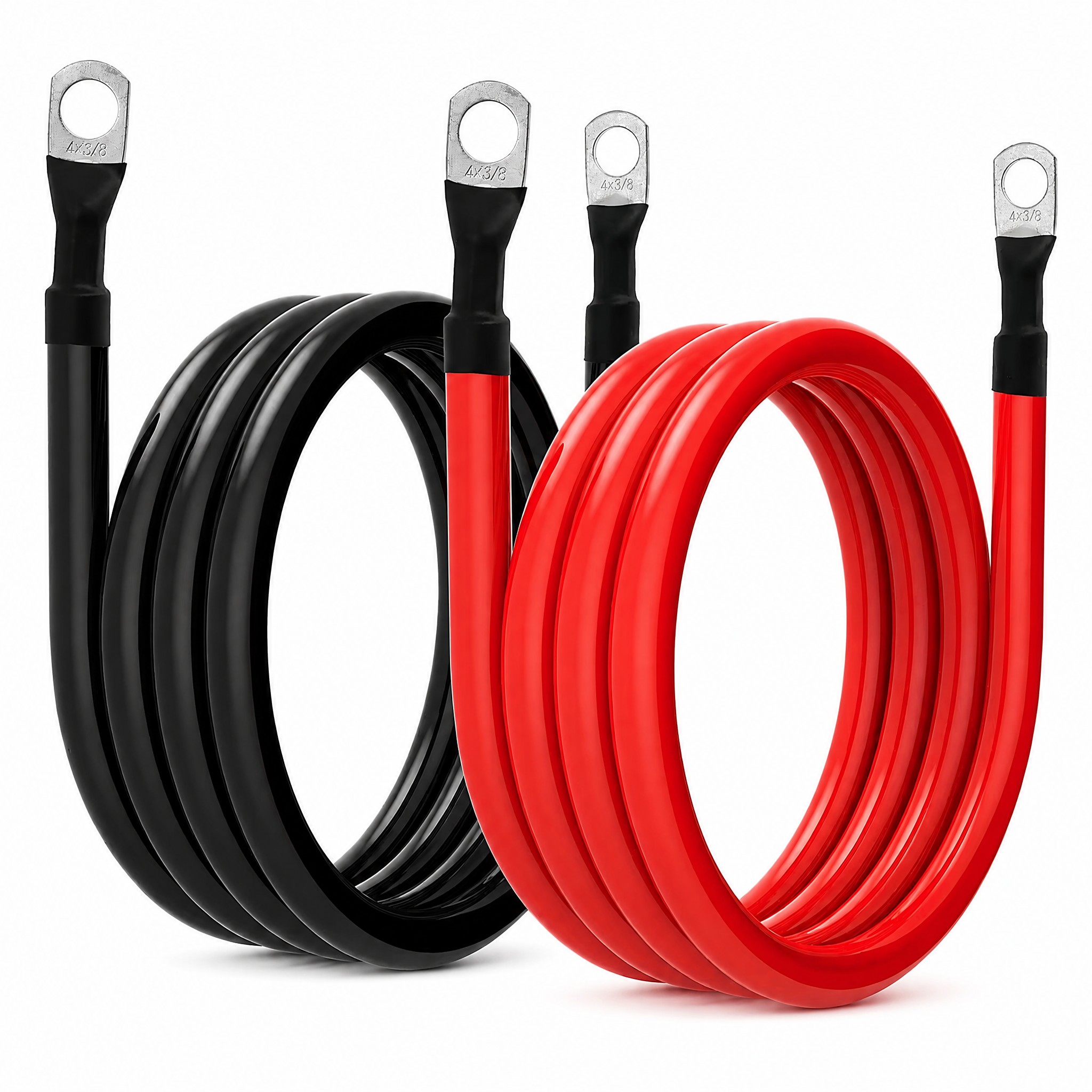
- Check the terminal torque when you fit it: M8 terminals on this battery, 3/8 inch (9.5 mm) ring terminals on the cable, and both need to stay tight under load.
The figures the range publishes
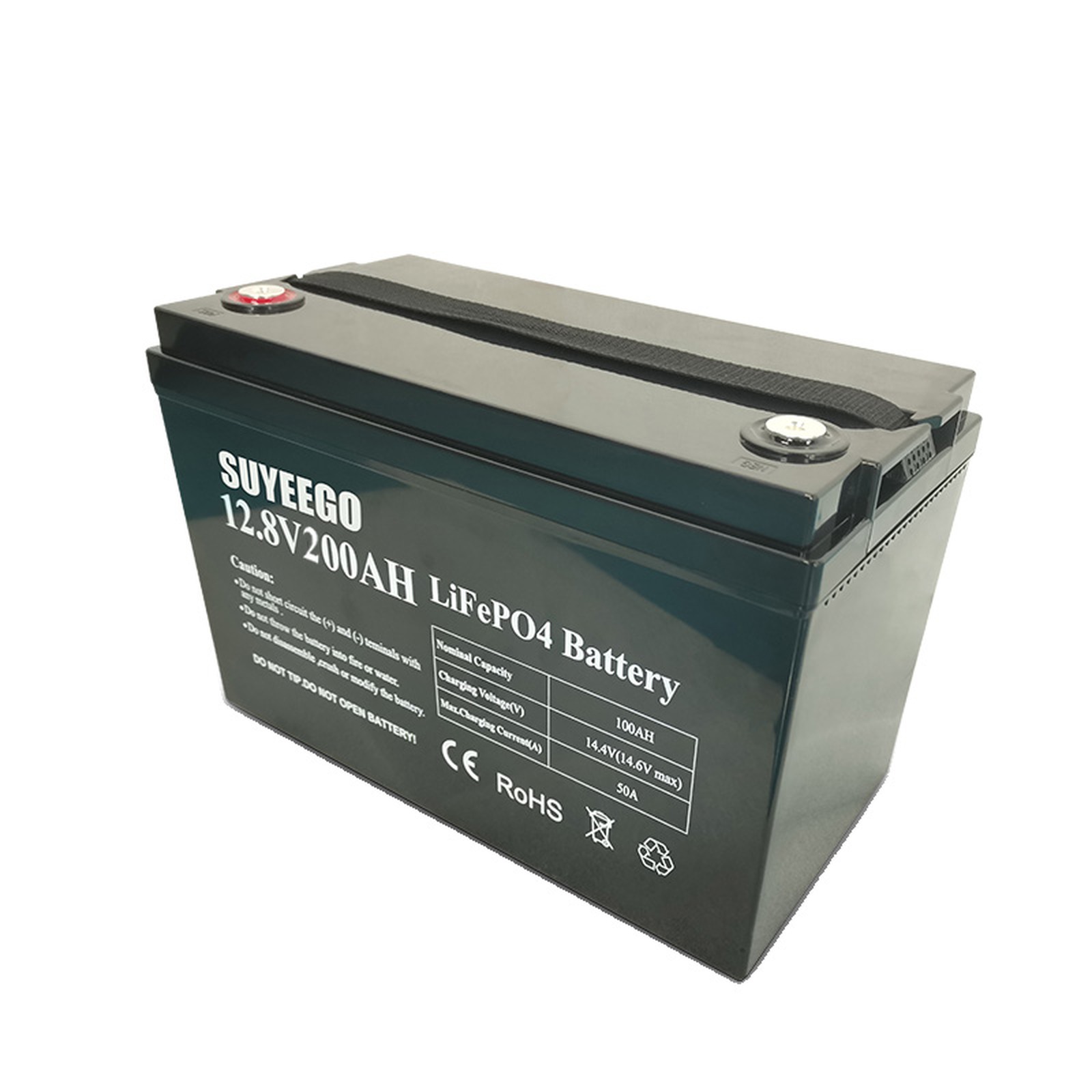
SUYEEGO's 12.8V 200Ah LiFePO4 battery stores 2.56kWh and is rated for 200A of continuous discharge and 100A of charging current, with an intelligent BMS and M8 terminals; the battery cable is 4 AWG pure copper with 3/8 inch (9.5 mm) ring terminals and a tin-plated jacket. Those are the numbers the main fuse has to sit above and be rated for, and the cable sizing guide on this site works through how the cable and the fuse are chosen together rather than separately.
Frequently asked questions
- Do I need a main fuse if the battery has a BMS?
- Yes. The BMS manages the cells in normal operation; the fuse is the passive part that opens a faulted circuit even if the electronics are no longer working. They do different jobs and one does not replace the other.
- What size fuse for a 200Ah lithium battery?
- Its rating follows the cable and the load, not the battery's capacity. It has to sit above the maximum current the system will draw and below the cable's capacity; the battery's 200A continuous discharge rating tells you what the battery can supply, and the fault current it can deliver tells you what the fuse has to be able to break.
- Can I use an ANL fuse on a lithium bank?
- A bolt-down strip fuse with an adequate DC rating is a common choice on a battery circuit. On a large lithium bank the argument for a fuse with a high interrupting capacity, which usually means a bigger cartridge type, is stronger, because that is the figure a lithium fault current tests.
- Where exactly should the fuse be fitted?
- On the positive cable, as close to the battery terminal as the mounting allows, so that the length of cable left unprotected is as short as possible. Everything downstream is protected by it; the short run between the terminal and the fuse is the part that is not.