How should solar cable be protected along its run?
6 min read
A cable run fails at three places rather than along its length: where it enters the structure, where it crosses a hard edge, and where it is fastened. Each needs something different. The entry needs a gland or a proper roof plate that seals around the cable instead of a hole it rattles in. The hard edge needs a radius and a grommet or sleeve, so the insulation is never the part taking the load. The fastened sections need support that carries the weight and ties that do not bite into the jacket. Insulation that has been abraded through does not announce itself until it touches something earthed.
Failures happen at transitions, not in the middle
A cable lying flat on a roof with nothing touching it will outlast the panels. What fails is the point where it changes from one condition to another: rigid to flexible, outside to inside, free to clamped. Those transitions concentrate movement and they are usually where someone has made a hole.
The entry
A hole drilled through a panel or a roof has a raw edge, and the cable moves in it every time the vehicle flexes. What seals the weather out is a gland or a purpose-made entry plate that compresses a seal around the jacket, not sealant smeared over a hole.
Two details decide whether the entry lasts. The first is that the cable should enter from below where the design allows, or with a drip loop, so water runs off the cable rather than following it inside. The second is strain relief: the cable should be secured close to the entry so movement happens on the outside of the seal, not inside it. The guide on bringing solar cable through a roof covers the choice of entry itself.
Hard edges and the radius
- Every edge the cable touches gets a grommet, a sleeve or a rounded insert. Insulation rubbed against sheet metal will lose.
- Keep the bend radius generous. A tight fold in a cable puts permanent stress on the strands at that point.
- Do not run cable through a hole in a metal panel without protection, even if the hole was deburred. Vibration finds the burr that was left.
- Where a cable passes a bulkhead, fix it on both sides so the movement is taken by the fixings rather than by the edge.
Along the run
Cable ties are the most common cause of a slow failure. Tightened hard, they compress the jacket and leave a stress point at every one. They also clamp the cable to a surface that expands and contracts in the sun, so the cable is being worked against a fixed point all day.
- Tie firmly enough to hold, not tightly enough to deform the jacket.
- Support the weight with a fixing near each end and at intervals along the run, so the cable is not hanging from a connector.
- Keep the run off hot surfaces and out of standing water.
- Use cable that is black and UV-stable for anything exposed. A jacket that chalks and cracks has stopped protecting the copper.
- Leave a service loop where the cable meets a component that will be removed, so the connector is not the strain relief.
Heat is part of the protection question
A cable's current capacity depends on how hot it is allowed to get, and the space it is run through decides that. A cable in free air on a roof carries more than the same cable bundled inside an insulated wall, and both are declared for a particular insulation temperature. Routing a run through a hot compartment does not just risk the jacket, it reduces what the cable was sized to carry.
Keep runs away from exhausts, engine bays and anything that reaches a temperature the insulation is not rated for. Where that cannot be avoided, protect with a sleeve and treat the cable's capacity as reduced.
What abrasion looks like before it fails
| What you find | Where it usually is | What caused it |
|---|---|---|
| Shiny flat spot on the jacket | Over a panel edge or a bulkhead | No grommet, or a fixing that allows movement at the edge |
| Jacket cracked and chalky | Anywhere in direct sun | Cable not UV-stable, or insulation past its life |
| Cable crushed oval under a tie | Wherever ties are tight | Overtightened tie, no protective sleeve |
| Green at the strands near a termination | At a joint that moves | Moisture entering where the seal was stressed |
| Cable hard and stiff in one section | Near a heat source | Insulation cooked, capacity reduced before it failed |
The parts this range uses
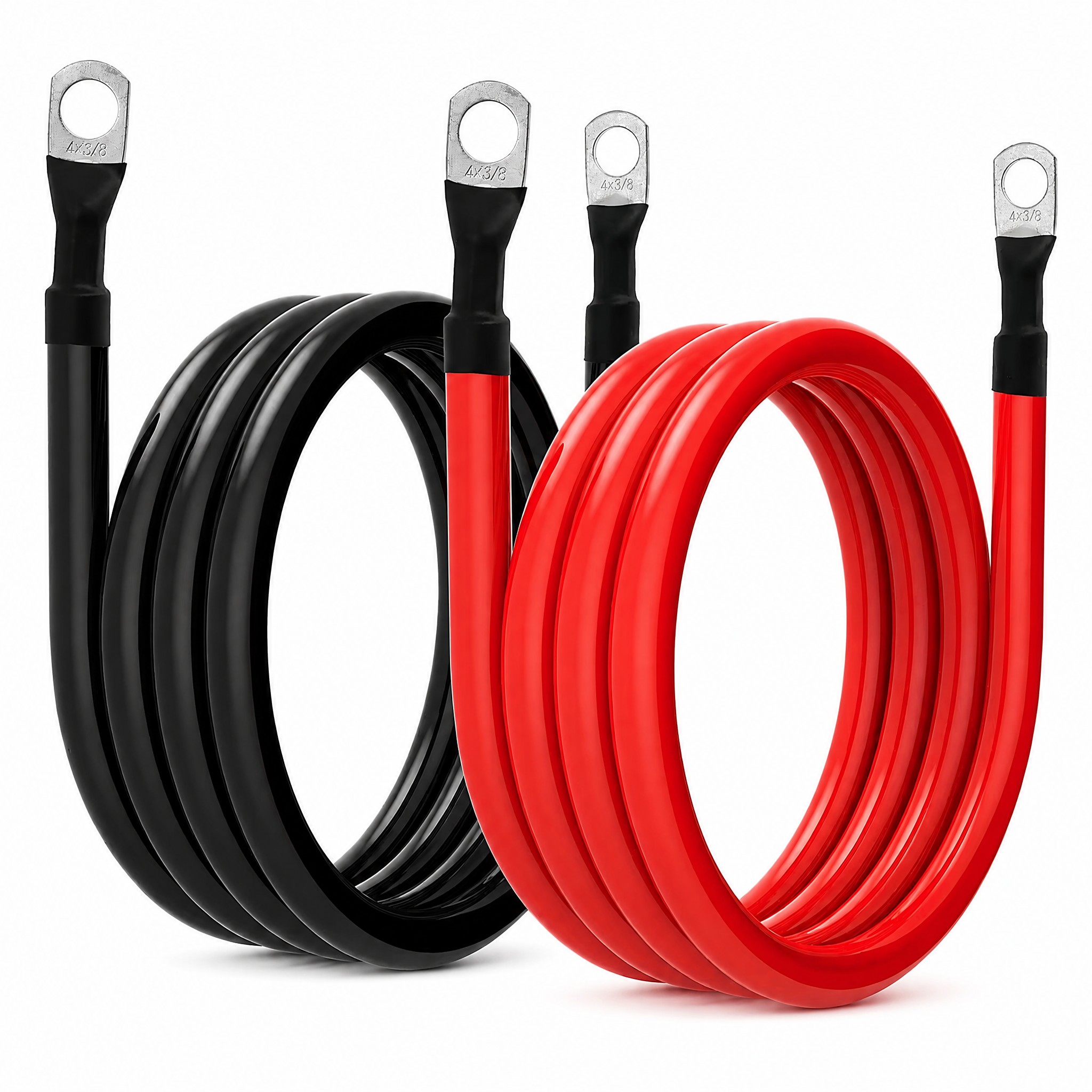
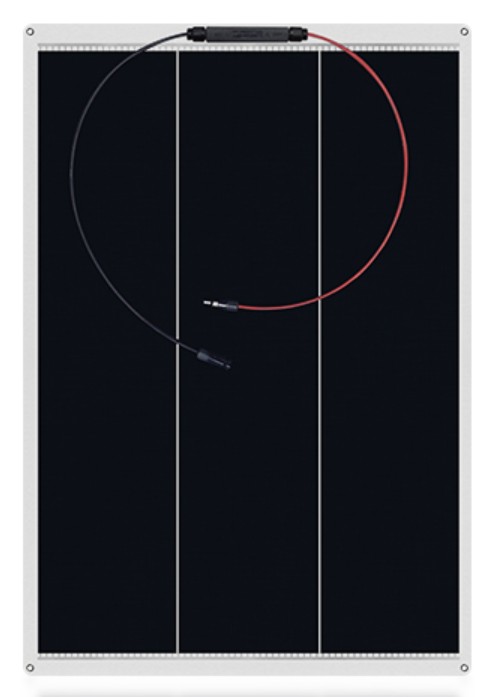
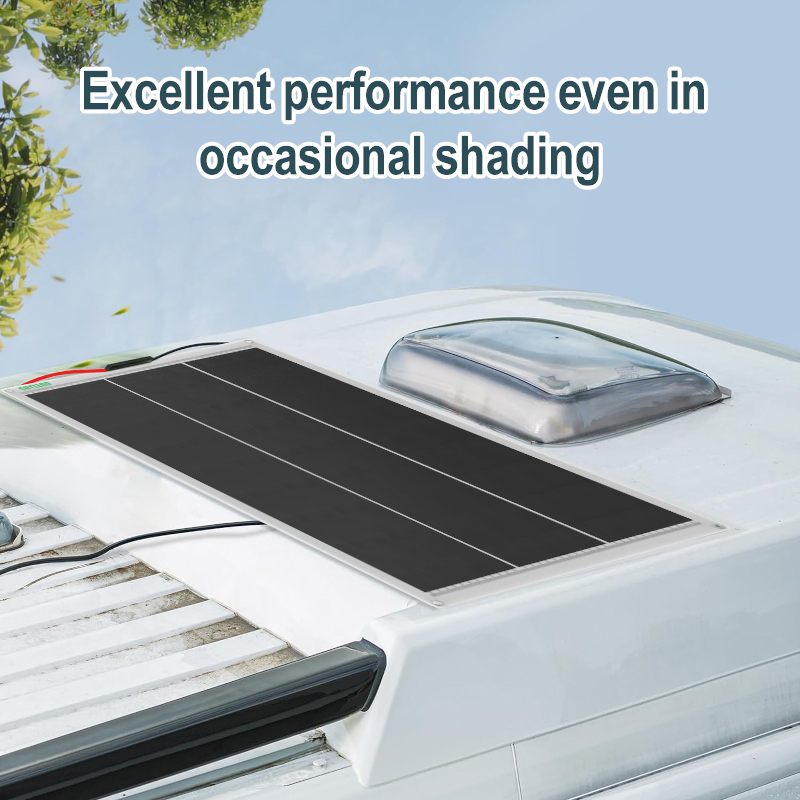
The battery cable in this range is 4 AWG pure copper with PVC insulation and a tin-plated jacket, which is what gives it abrasion resistance and keeps the copper out of contact with air. The flexible panels run from 50W to 230W and mount directly on the roof surface, so the run from panel to controller is usually short, exposed, and crossing at least one edge, which is exactly the section this guide is about.
Frequently asked questions
- Can I just seal around the cable with silicone?
- Sealant alone does not provide strain relief, so the cable keeps moving inside the seal and the seal eventually opens. Use a gland or an entry plate that compresses around the jacket, secure the cable close to it, and let the fitting do the sealing.
- How tight should cable ties be?
- Firm enough to hold the cable in place, not tight enough to deform the jacket. A crushed cable has a reduced cross-section at that point and a stress riser at every tie, which is where abrasion failures start.
- Does it matter if the cable runs through a hot compartment?
- Yes. A cable's current capacity depends on the temperature it is allowed to reach, so running it through a hot space reduces what it can carry as well as ageing the insulation. Keep away from heat sources, or protect and treat the capacity as reduced.
- How do I know a run is chafing before it fails?
- Look for a shiny flat spot on the jacket, especially where the cable crosses an edge or passes a bulkhead. A polished patch means movement against something harder than the insulation, and it will keep going until the copper is exposed.