Breaker or fuse: which belongs in a 12V system?
7 min read
Both devices do the same thing in principle: they open the circuit when current goes somewhere it should not. They differ in what happens afterwards and in how much fault current they can stop. A fuse is a one-shot part with a sealed arc chamber, so it is cheap, it cannot be reset by mistake, and it is available with very high interrupting ratings. A breaker can be reset, which is convenient on a branch circuit, but it has mechanical parts and it only does its job if it is rated for direct current at your system voltage. The main battery circuit is where fault current is highest, so that is where the interrupting rating matters most; branch circuits are where convenience usually wins.
The difference that matters is the one after the trip
Both devices are chosen the same way to begin with. The rating sits above the load's maximum draw and below the capacity of the cable it protects, and the voltage rating has to suit the system. Up to that point they are interchangeable. The choice comes down to what the device has to survive, and to what you want to happen next.
| Form | Resets | Fault current it can stop | Where it fits |
|---|---|---|---|
| Blade fuse | No, replaced | Modest, matched to small branch circuits | Lights, pumps, control feeds, small accessories |
| Bolt-down strip fuse | No, replaced | High | Main battery positive, inverter feed, charger and controller feeds |
| Large DC cartridge fuse | No, replaced | Very high, which is the point on a lithium bank | The main battery circuit |
| DC breaker | Yes, by hand | Depends entirely on the model and its marking | Branch circuits, and anywhere a trip is easier to reset than to replace |
Why direct current is harder to break
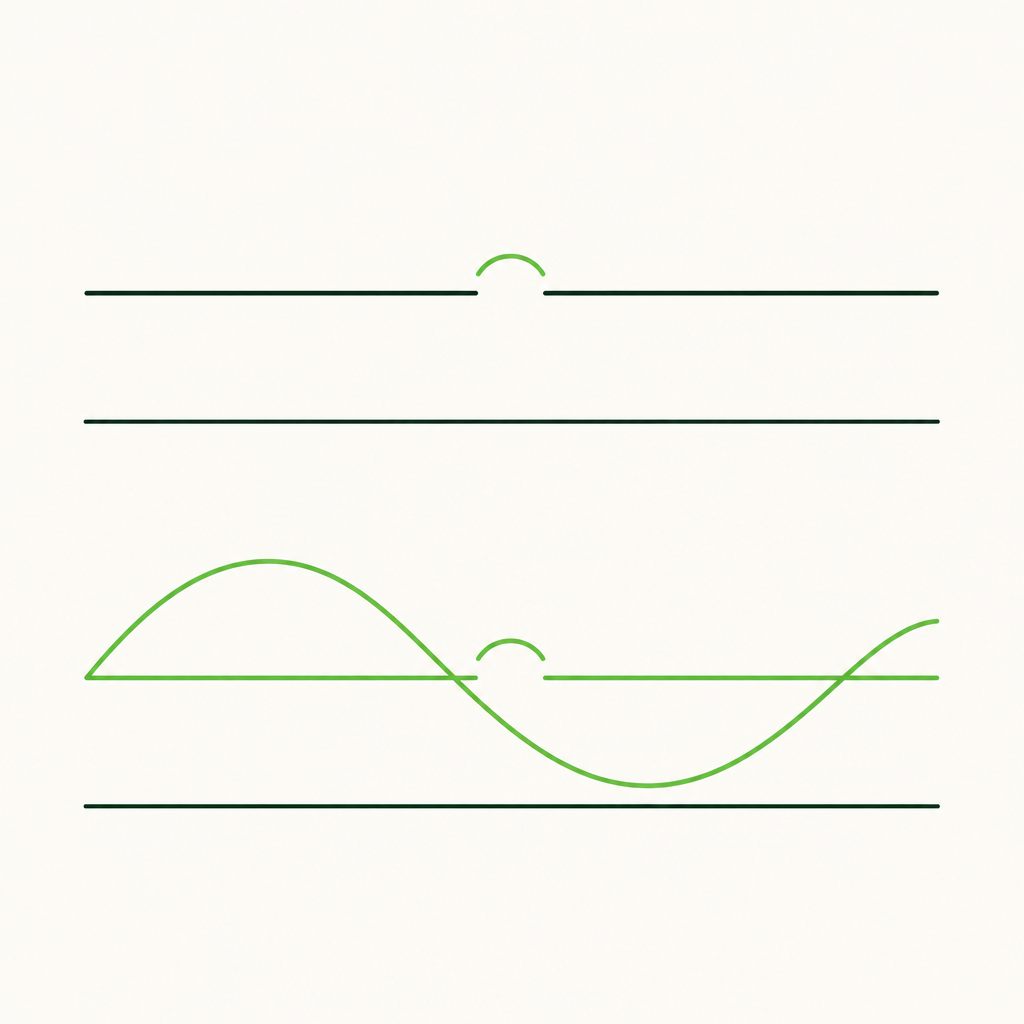
An arc forms as the contacts separate, and it keeps conducting until it is stretched far enough or cooled enough to stop. Alternating current helps here without being asked: it passes through zero twice every cycle, so an arc drawn at the wrong moment is extinguished almost immediately. Direct current sits at full value and keeps feeding the arc for as long as the path exists.
That is why a device built for mains AC is not a substitute for a DC device, even at the same current rating. A DC-rated breaker deals with the arc deliberately, using a magnetic blowout coil or an arc chute to stretch it, sometimes with several contact gaps in series. A household breaker has none of that because it never needed it.
The two markings that decide it
- The DC voltage rating. A part marked for 32V DC is at home on 12V and 24V systems and is the wrong part on a 48V one, where it may fail to clear a fault at all.
- The interrupting rating, sometimes printed as the short-circuit capacity. This is the largest fault current the device can safely stop. It is not the same number as its current rating, and it is the number that matters on the battery side of the system.
- For a breaker, whether the rating is for DC at all. A part that only says AC, or only gives an AC voltage, has not been qualified for this job.
Where a breaker earns its place
Branch circuits are the natural home for a breaker, because the faults there are usually small and the cause is often something you can see and fix: a chafed wire, a pump that seized, a socket with water in it. Being able to reset it at the panel and find out immediately whether the fault is still there is worth more than the price difference.
There is one habit worth knowing about. A thermal breaker trips on heat, and its own enclosure contributes to that, so a breaker packed into a warm cupboard with other warm things may trip below its marked rating. If a circuit that should be fine keeps tripping on hot days, the breaker's environment is part of the diagnosis, not just the load.
Where a fuse wins
The main battery circuit is the one place where a fuse is usually the better answer, and the reason is the fault current rather than the price. A large lithium bank can deliver a very large current into a short circuit, far above anything a branch circuit can produce, and a sealed fuse with a high interrupting rating is built for exactly that. It also has no mechanism to weld shut, no contacts to corrode and nothing to reset by someone who has not found the fault yet.
The position matters as much as the device. The main fuse belongs on the battery's positive cable, as close to the terminal as the mounting allows, so that the length of cable left unprotected is as short as possible.
Using both in one system is normal
Most well-built systems have both, and the split follows the current. The battery main is a fuse, close to the terminal, rated to the cable. The feeds to the inverter, the charger and the controller are fused at the point they leave the battery side. The branch circuits downstream of the distribution point use breakers or blade fuses, whichever suits the panel. Nobody has to win the argument.
The parts this range uses
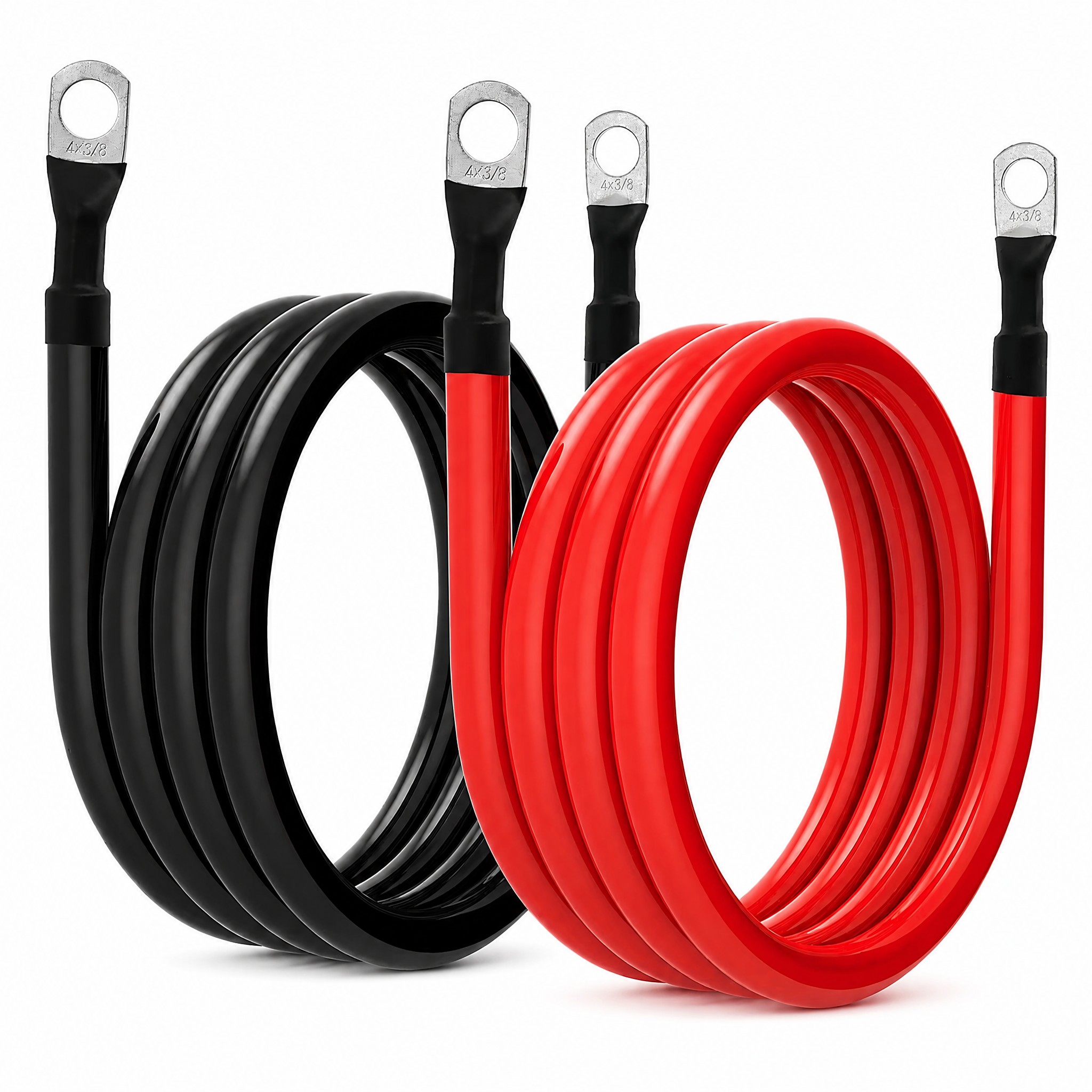
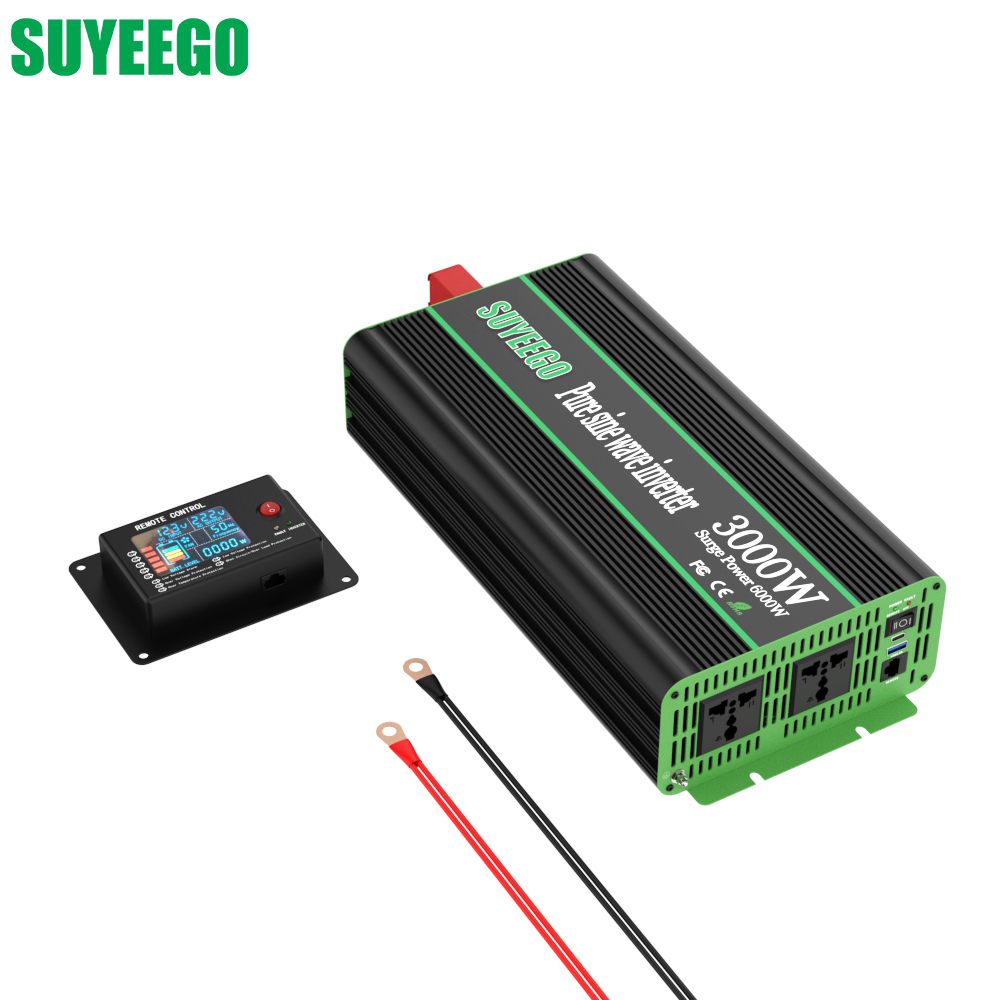
The figures that set the choice on a SUYEEGO system are published: the 12.8V 200Ah LiFePO4 battery is rated for 200A of continuous discharge, the pure sine wave inverters run from 1kW to 3kW with a peak rating twice their continuous figure, and the battery cable is 4 AWG copper with 3/8 inch (9.5 mm) ring terminals. A 2000W inverter on a 12V system already means a main cable and a main fuse carrying roughly 185A, and a battery whose fault current is many times that, which is where the interrupting rating stops being a specification and starts being the reason to choose one device over another.
Frequently asked questions
- Can I replace a fuse with a breaker of the same rating?
- Only if the breaker is rated for DC at your system voltage and its interrupting rating covers the fault current available at that point. On a branch circuit that is usually achievable. On the main battery circuit of a lithium bank, many breakers do not have the interrupting rating to do the job safely.
- Why does my breaker trip when it is hot outside?
- A thermal breaker trips on heat, and a warm enclosure adds to the heat it generates itself. A breaker packed in with other warm equipment can trip below its marked rating. Treat the enclosure temperature as part of the circuit when diagnosing it.
- Does a DC breaker need a different rating from an AC one?
- Yes, and not only on paper. Direct current has no zero crossing to help extinguish an arc, so a DC breaker is built to stretch and cool the arc deliberately. A breaker marked only for AC has not been qualified for this, whatever its current rating says.
- Is a fuse still needed if I fit a breaker on the main circuit?
- The main circuit needs protection that can stop the battery's fault current, and on a lithium bank that usually means a fuse with a high interrupting rating rather than a breaker. A breaker downstream can still be useful for isolating a branch, but it is not a substitute for that first device.