Can you run two RV inverters together?
6 min read
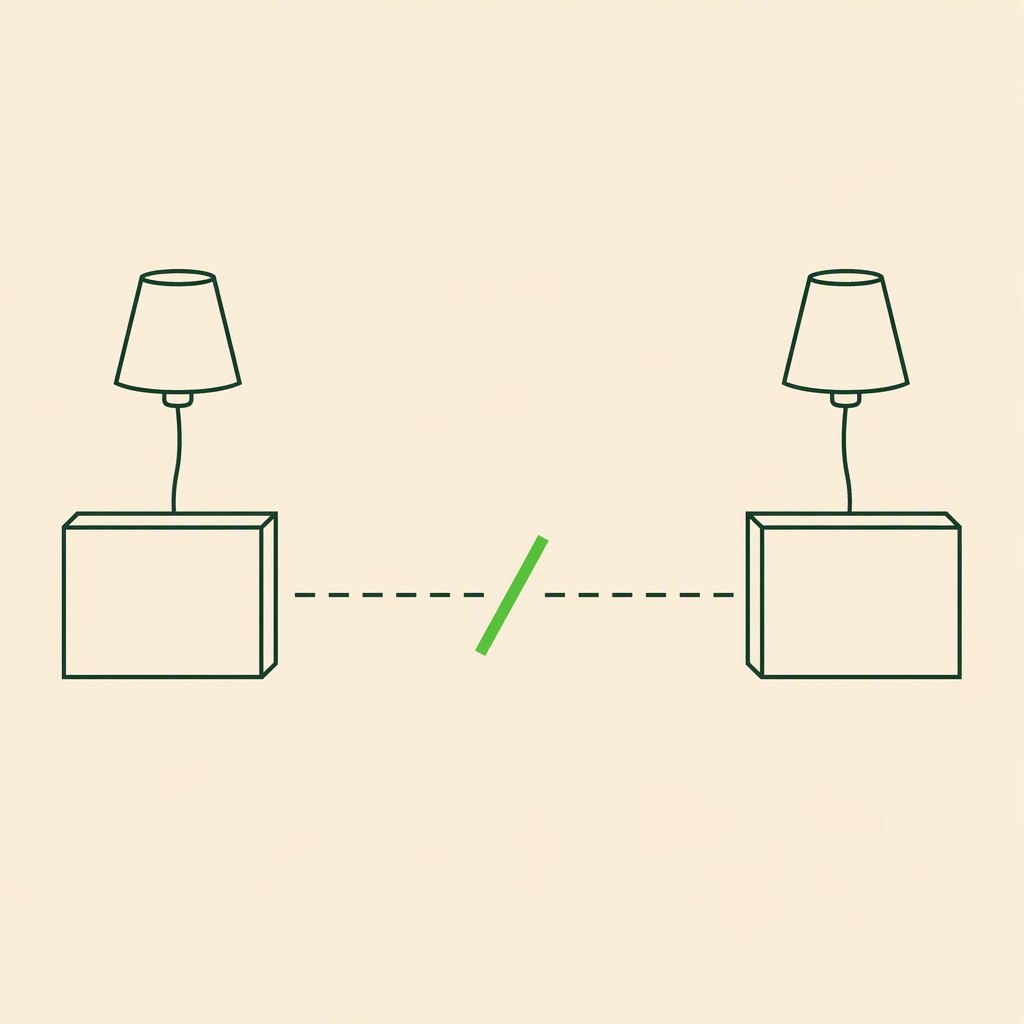
Not as one bigger supply. Our range publishes no parallel or synchronising capability, so two units cannot be tied at their AC outputs to share a load. They can be run side by side as two independent systems, each with its own load, its own fuse and its own circuit. If you need more than one model can deliver, the published range goes up to 3000W continuous.
Why outputs cannot simply be joined
AC has a shape, and two inverters have to agree on it. Each unit generates its own waveform from its own oscillator, and two of them will drift apart in phase and frequency. Joined at the output, one tries to drive the other rather than the load, and the current that flows between them is not doing any useful work.
Manufacturers who sell units intended to be combined publish that capability and the method for it, usually with a synchronising link between the units. Our range publishes no such feature, so the honest answer is that this is not a supported arrangement.
What our range publishes
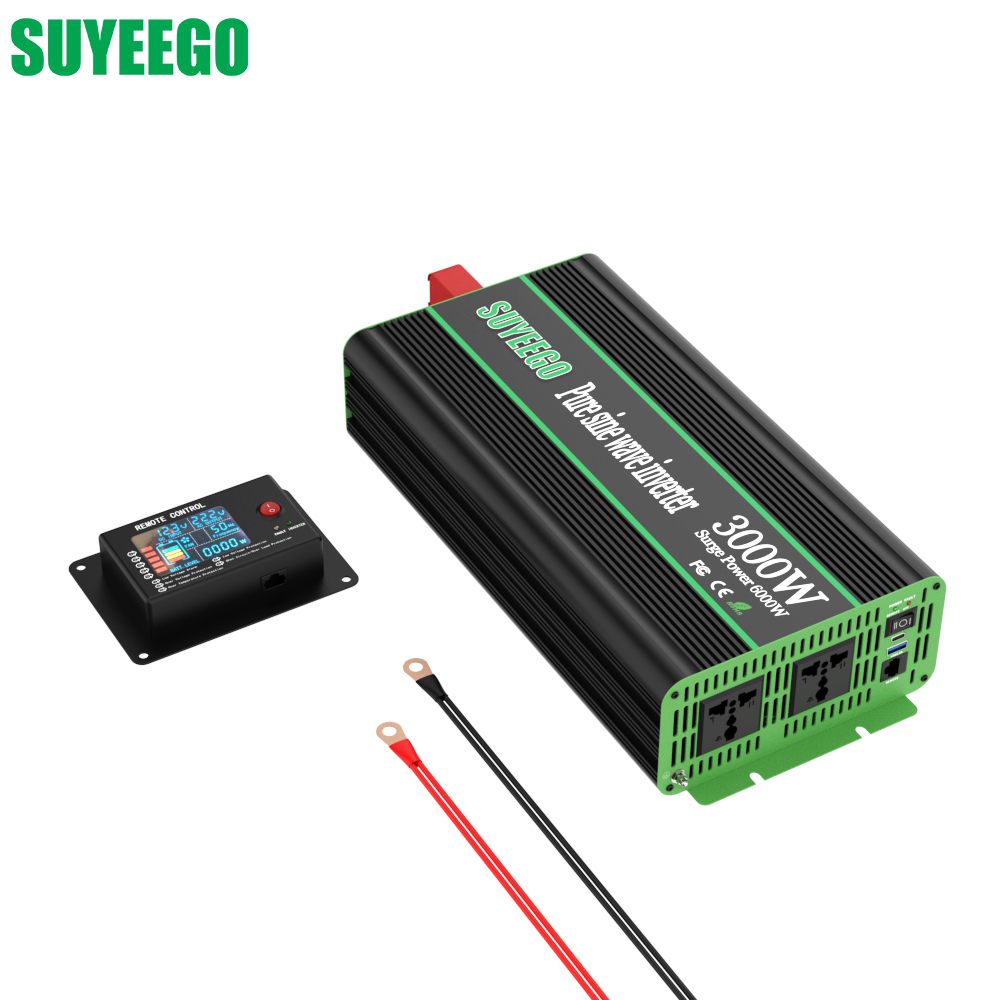
- Five models, 1000W to 3000W continuous, with a peak at twice the continuous figure.
- A 12V or a 24V DC input, and a 110V or 220V AC output fixed at order.
- Protection for overload, short circuit, overheat and reverse connection, and a low-voltage alarm and cut-off.
- No published parallel, stacking or synchronising function.
Running two units independently
Two inverters on one vehicle can be perfectly sensible, as long as they stay separate. Each gets its own DC fuse or breaker from the bank, its own output circuit and its own loads. Keep the two AC installations apart: two sockets supplied by two units is fine, one socket fed by both is not.
The usual reason people ask
Most of the time the question comes from wanting more power without buying a bigger model. The published range already covers 3000W continuous with a 6000W peak, and one larger unit is simpler to wire, easier to protect and easier to explain to the next owner than two smaller ones.
The other reason is a redundant pair, on the theory that one can take over if the other fails. That works only if the circuits are genuinely separate, which brings the answer back to running them independently.
Frequently asked questions
- Can two inverters share one battery bank?
- Yes, if each has its own protection on the DC side. They draw independently, and the bank, the cables and the fuses have to be sized for the total current rather than for one unit.
- Can I use one inverter for the big appliances and one for the small ones?
- Yes, and keeping them on separate circuits is exactly the arrangement that works. The two outputs must never meet.
- Is there a model that is designed to be paralleled?
- Not in our published range. If parallel operation is a requirement, it has to be a published feature of the model you buy, with the method the manufacturer specifies.
- What happens if two outputs are connected by mistake?
- They fight each other rather than sharing the load, and one or both can be damaged. The overload and short-circuit protection in our units is not a substitute for keeping the two installations separate.