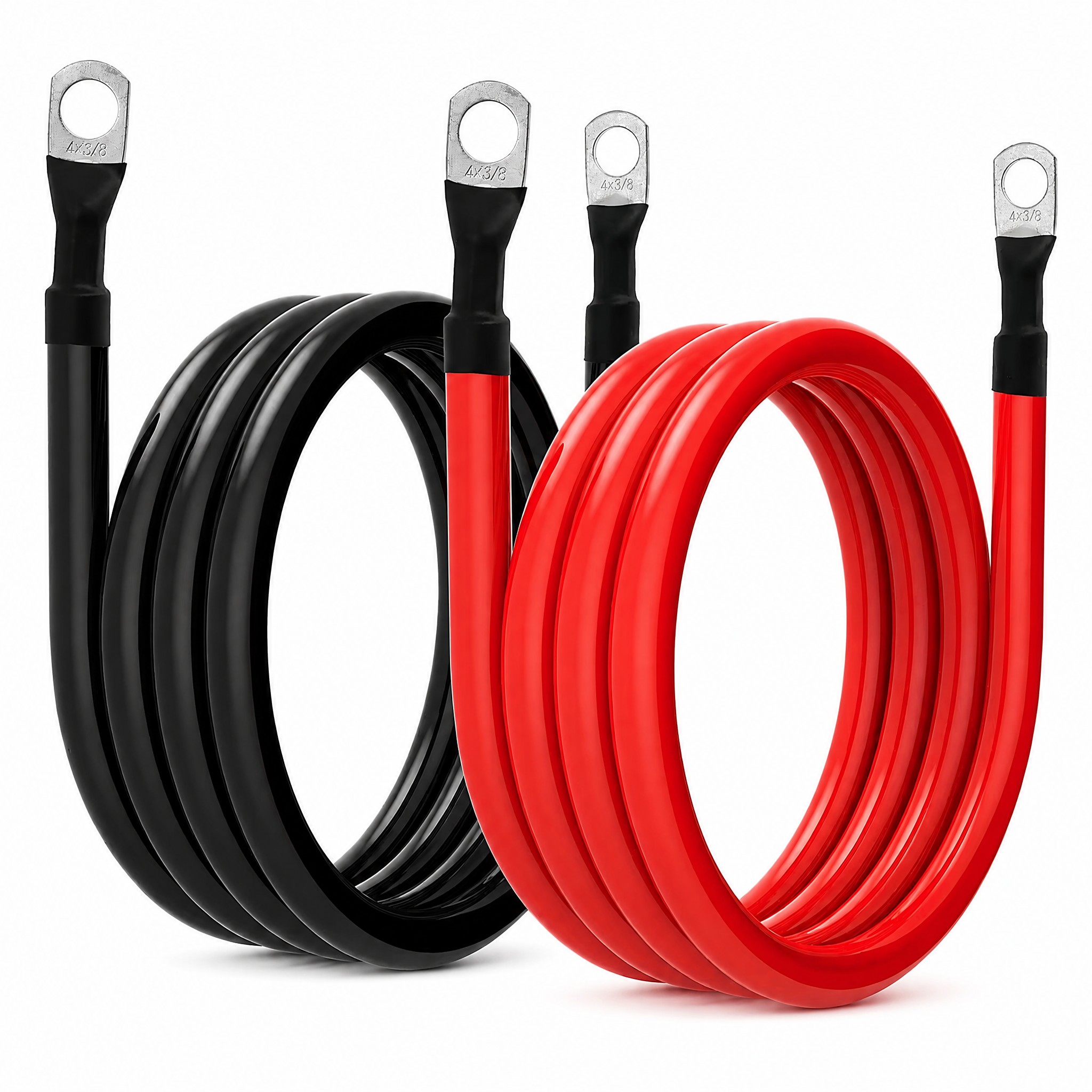
Battery terminal and lug sizes: what has to match?
6 min read
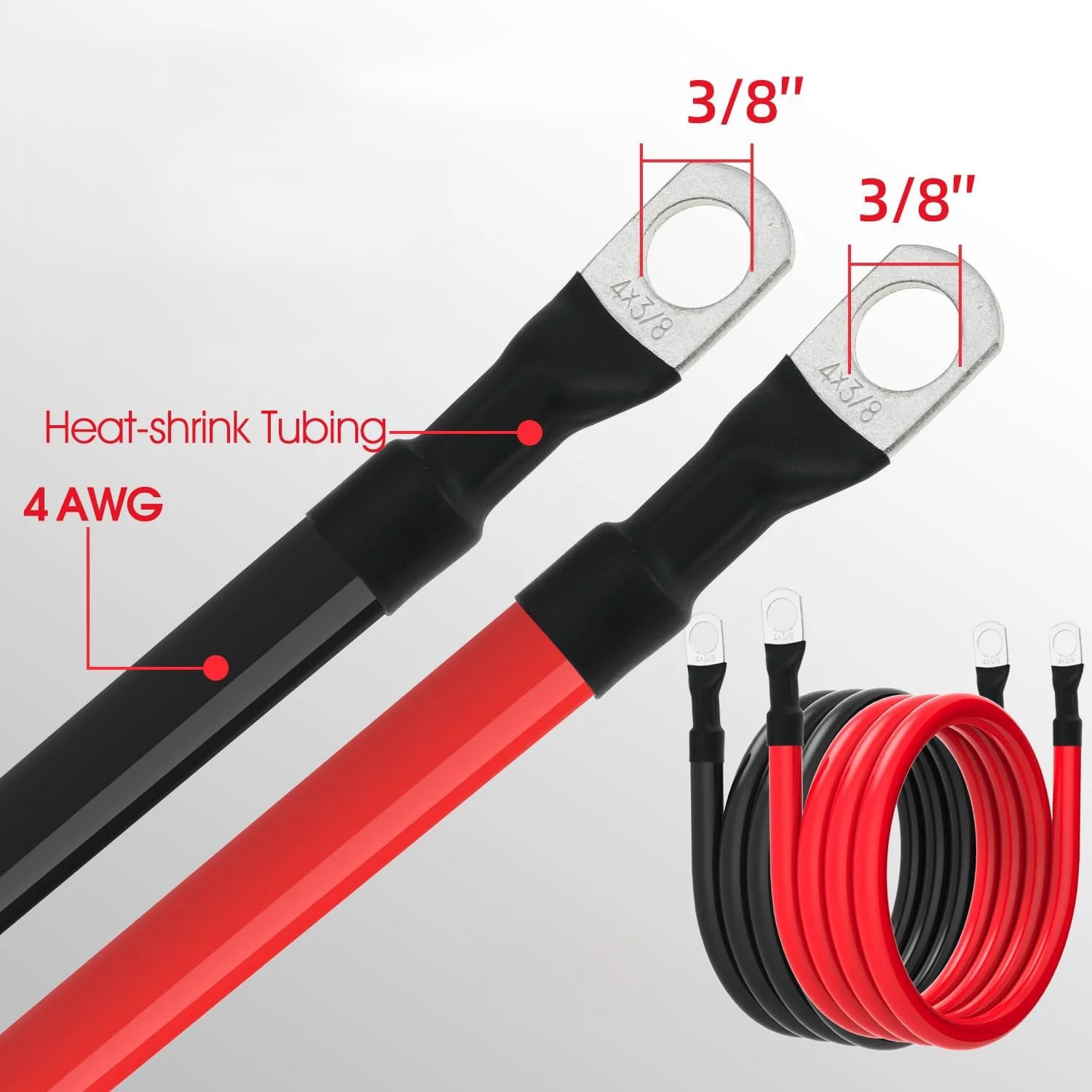
Two dimensions matter, and they are different ones. The stud is the threaded post the connection is bolted onto — M8 on the 12.8V 200Ah LiFePO4 battery in the range, which is an 8 mm post. The lug is the flat ring on the end of the cable, and the battery cable is supplied with 3/8 inch (9.5 mm) ring terminals. A bore slightly larger than the stud is normal and intended; what has to match is the flat clamping face, because the current passes through the area where the lug is pressed against the terminal, not through the bore. A joint fails when that face is too small, the nut is not tight enough, or corrosion has grown between the two surfaces.
Stud and bore are two different measurements
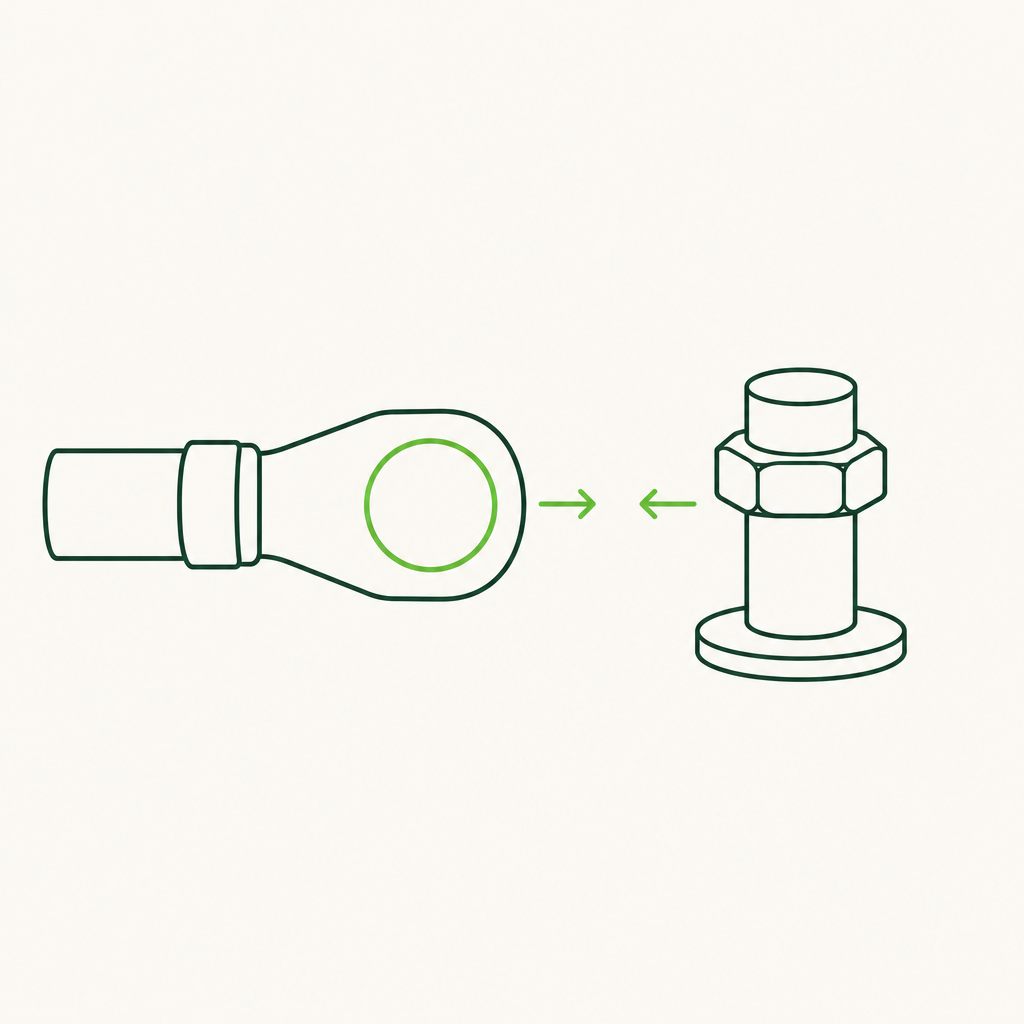
The stud is quoted by its thread — M8 is an 8 mm post — and the lug by the diameter of its bore. A 9.5 mm bore on an 8 mm stud leaves clearance to get the lug over the thread, and the assembly still works perfectly well, because no current is expected to flow through the small ring of air around the stud. Where a mismatch matters is the other way round: a lug whose bore is too small will not go on at all, and forcing it damages the plating and the threads.
What actually carries the current
The current crosses from the lug into the terminal across the flat faces that touch, and that area is what sets the joint's resistance. The nut's only job is to provide the force that keeps the two faces in intimate contact. This is why the same cable can be perfectly adequate with a tight nut and a fire risk with a slack one, and why a joint that has been hot once tends to get worse: the heat oxidises the faces, the oxide increases the resistance, and the next load makes it hotter still.
Stacking more than one cable
- Give each lug its own flat face wherever the terminal allows it, rather than sandwiching two lugs together.
- Put the heaviest cable closest to the terminal's base, so it takes the shortest path and is least likely to shift.
- Keep the stack as short as possible: the nut has to land fully on the stud with the whole stack in place, not perch on the end of the thread.
- A washer between the terminal face and a lug adds a joint in the middle of the current path. Use one under the nut if the hardware calls for it, not between the current-carrying faces.
- Recheck the torque after the first few heat cycles, and again after a long trip. New joints settle.
The three ways a joint goes bad
| Failure | What it looks like |
|---|---|
| Loose | Warm under load, discoloured nut or lug, a joint that moves when you try it by hand |
| Corroded | White or green deposit on the terminal, often on a battery that vents or lives in a damp locker, and more likely where bare copper meets a dissimilar metal |
| Too little contact area | A small lug on a large terminal, or several lugs sharing one face, so the joint runs warm from the start |
What a good cable brings to the joint
SUYEEGO's battery cable is 4 AWG pure copper with PVC insulation and a tin-plated jacket, supplied as a red and black pair with 3/8 inch (9.5 mm) ring terminals and heat-shrink already fitted, cut to the length the run needs. The tin plating matters at the joint as much as along the cable: it resists the surface corrosion that would otherwise build up between the lug and the terminal. And the cable is made to measure because surplus length does not help anything — the shorter the run, the less voltage it drops and the easier it is to keep tidy.
Frequently asked questions
- What size lug fits an M8 battery terminal?
- A 3/8 inch (9.5 mm) bore is the usual pairing, and it is what this battery cable is supplied with. The bore only has to clear the 8 mm stud; the clamping face is the measurement that has to be right.
- Can I drill out a lug to make it fit?
- No. Drilling removes the plated surface that resists corrosion and cuts away material around the bore, which is part of where the current flows. Fit a lug with the correct bore instead.
- Should there be a washer under the lug?
- The lug should sit directly on the terminal's flat face. A washer between the two adds a joint in the current path and reduces the metal-to-metal contact that carries it. If the hardware calls for washers, use them under the nut.
- Can I connect two cables to one battery terminal?
- Often yes, but each lug needs its own flat face and the nut must still clamp the whole stack properly. If the stud is too short for the stack, move one of the connections to a separate terminal or a busbar.