Which fuse type belongs where in a 12V system?
7 min read
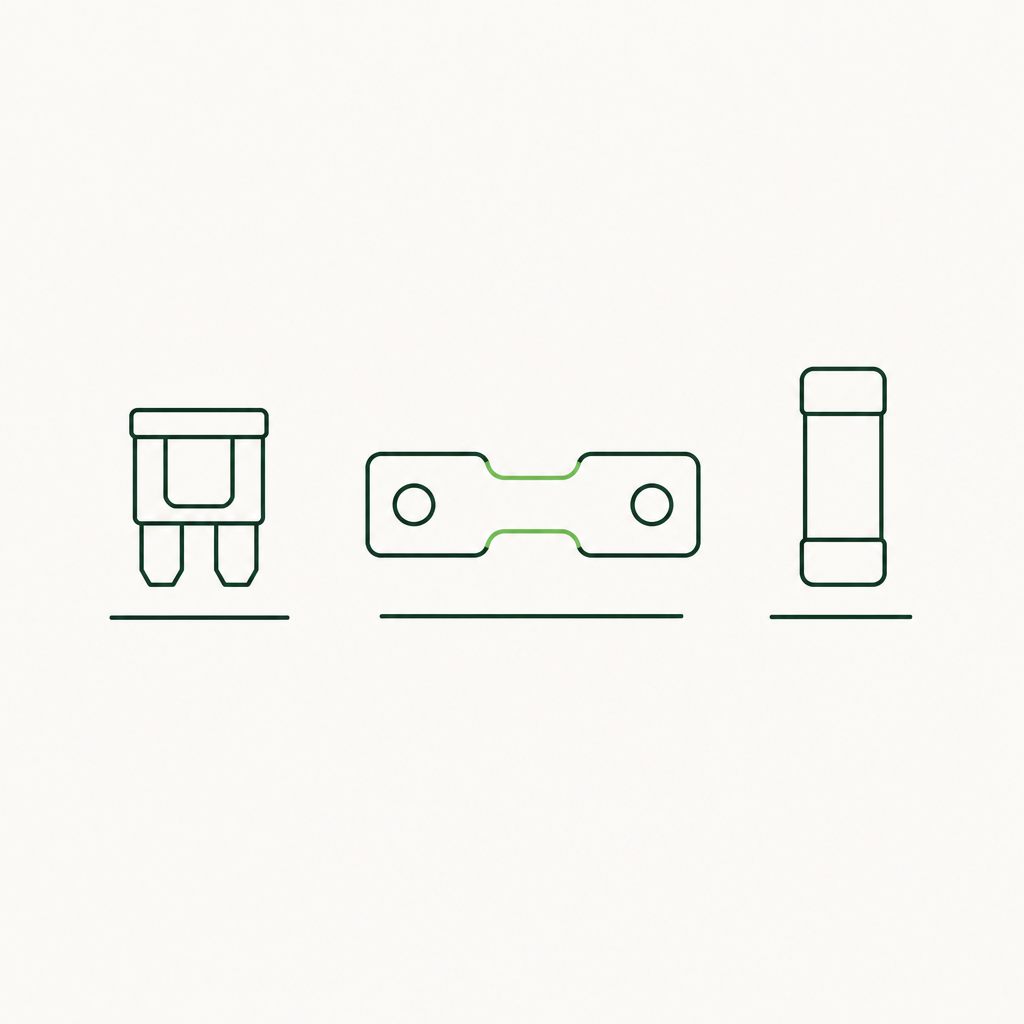
Fuses come in a handful of physical forms, and the form decides which jobs a fuse can do. Small blade fuses belong on the circuits that branch off a distribution block — lights, pumps, a fridge's control feed — where the current is modest and a cheap part you can replace anywhere is an advantage. Bolt-down strip fuses belong on the heavy cables: the main battery positive, the feed to an inverter, the run from a charger. Large cartridge fuses belong on the main battery circuit where the available fault current is high, which on a lithium bank it certainly is. The rule underneath all of it is the one the cable sizing guide states: a fuse protects the cable it sits in, so its current rating has to fall between the load's maximum draw and the cable's capacity, and its voltage rating has to suit the system it is protecting.
The forms, and what each is good at
| Form | Where it belongs | Why |
|---|---|---|
| Blade fuse, push-in | Branch circuits: lights, pumps, control feeds, small accessories | Cheap, small, replaceable anywhere, and the holders take up almost no space |
| Bolt-down strip fuse | Main battery positive, inverter feed, charger and controller feeds | Takes heavy cable, bolts down to a solid surface, and comes in the higher ratings those cables need |
| Large DC cartridge fuse | The main battery circuit on a lithium bank | Built to break a very large fault current and to hold off the system voltage while it does |
| Resettable breaker | Any of the above where a trip is more convenient than a replacement | You can reset it, but it has to be rated for DC at the system voltage rather than for mains AC |
The current rating still comes from the cable
The form changes; the arithmetic does not. Work out the maximum current the load can draw, choose a cable that carries it with headroom, and then choose a fuse rating that sits above the load's draw and below the cable's capacity. Sizing the fuse to the appliance rather than to the cable is still the mistake that matters, whichever shape the fuse is: a fuse that never blows may simply be too large to protect anything.
Voltage rating is the part people skip
Every fuse has a voltage rating as well as a current rating, and it describes the voltage it can extinguish rather than the voltage it can carry. A part rated for 32V DC is at home on a 12V or 24V system and is the wrong part on a 48V one, where it may not clear a fault at all. The rated for DC part of that sentence matters too: a device designed for mains alternating current relies on the current crossing zero to put the arc out, and direct current never does. The companion guide on DC voltage ratings goes through why.
Where each one goes in the chain
- The main battery fuse is the largest one in the system and sits closest to the battery, because everything downstream depends on the cable it protects.
- The feed from a charger or controller to the battery is fused on its own, sized above the device's output and below the cable.
- An inverter feed is fused above the inverter's maximum draw and below the cable, remembering that a 12V inverter draws a very large current at the battery end.
- Each branch circuit off the distribution block gets its own small fuse, sized to that branch's cable rather than to the block.
- Parallel solar strings may need string fusing where several strings are combined; a single series string does not normally need one.
Choosing without guessing
Work through it in the order the system is built: the current the load can draw, then the cable that carries it, then a fuse that protects that cable, then a form that fits the current and the mounting, and finally the DC voltage rating and the fault current the source can deliver. Most of it is decided by two numbers and one physical constraint, and the fuse is one of the few safety devices you can check by hand afterwards — at the correct rating, it should be the part that fails first.
The parts this range uses
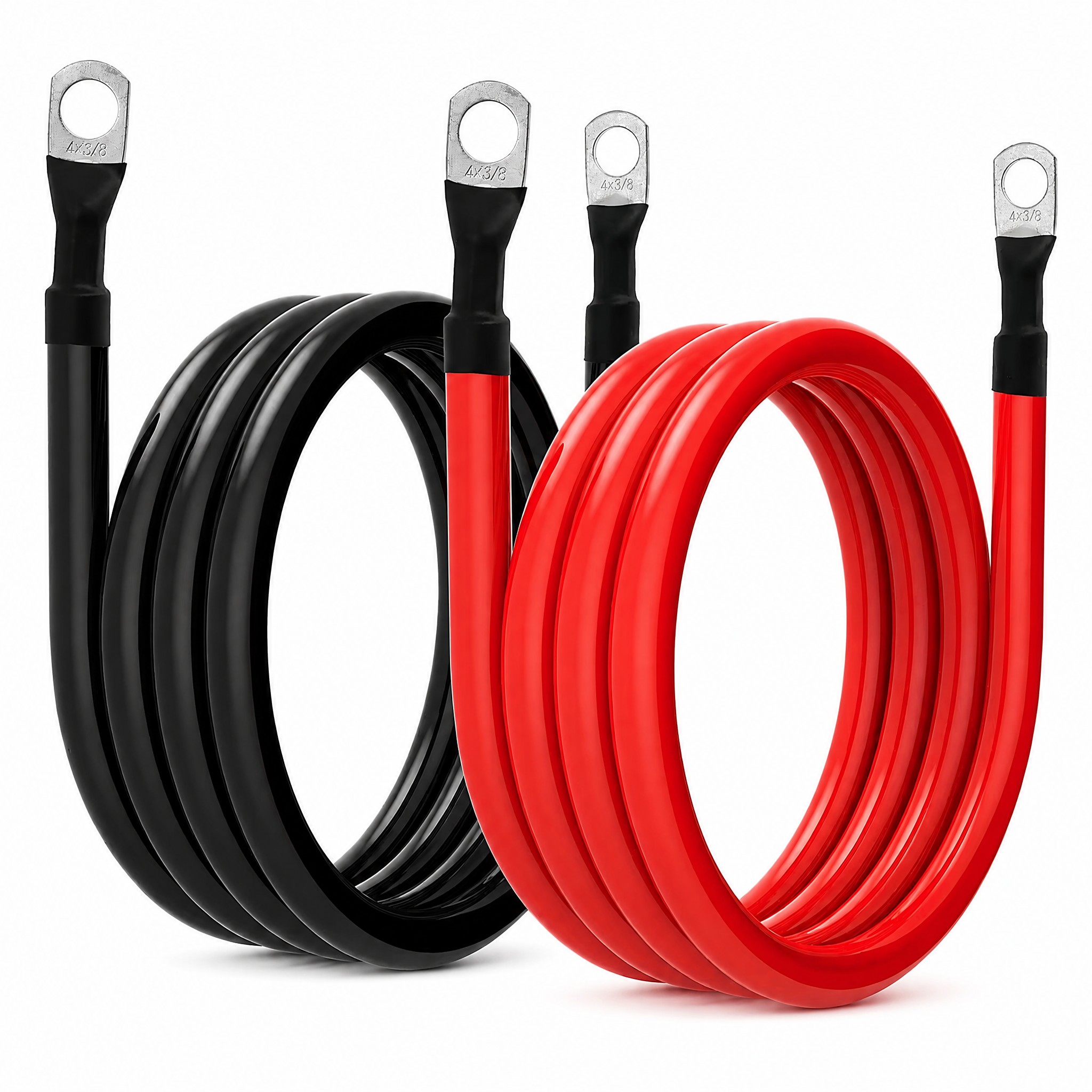
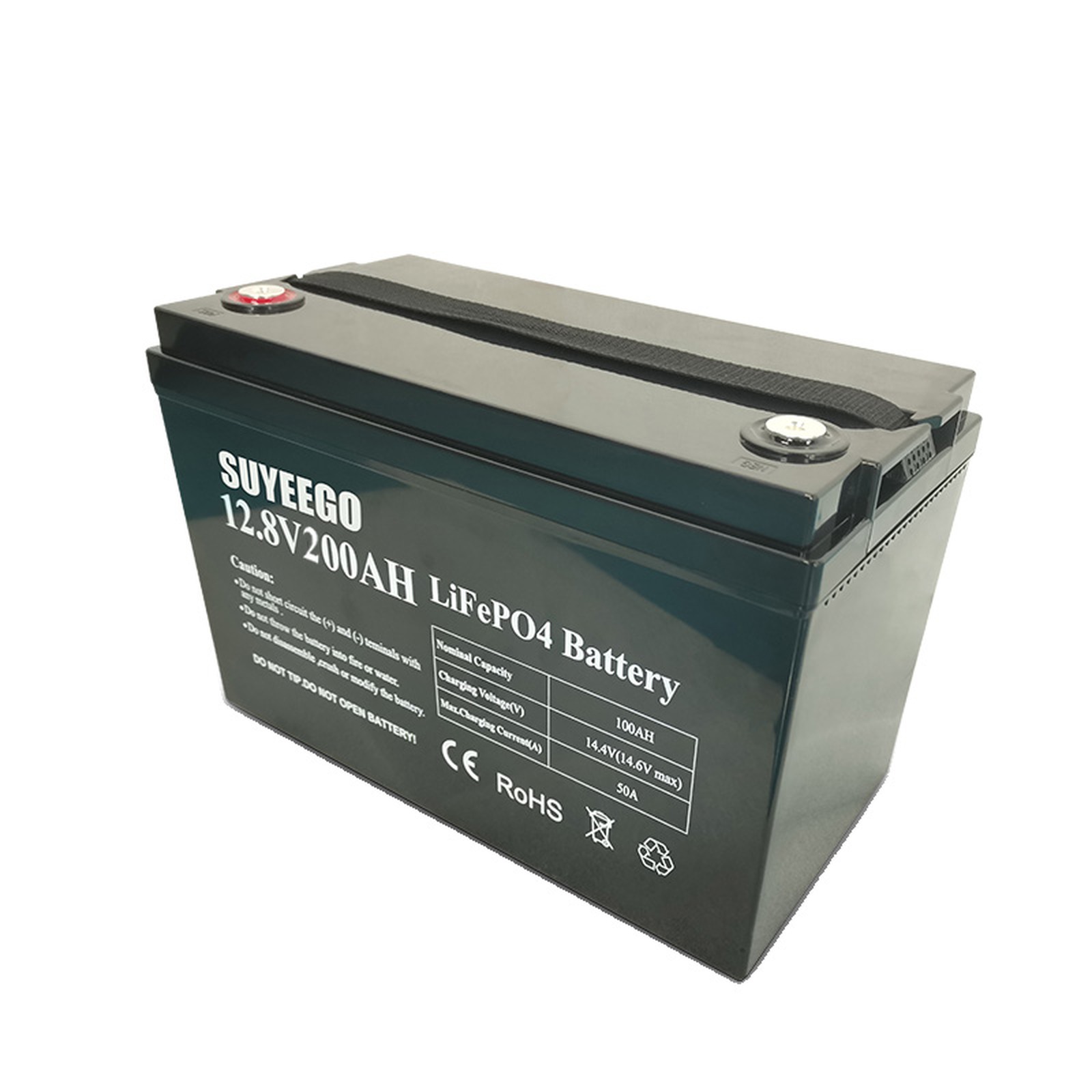
The figures that decide the fuse on a SUYEEGO system are published: the 12.8V 200Ah LiFePO4 battery is rated for 200A of continuous discharge, the pure sine wave inverters run from 1kW to 3kW with a peak rating twice their continuous figure, and the battery cable is 4 AWG copper with 3/8 inch (9.5 mm) ring terminals. On a 12V system feeding a 2000W inverter that already means a main cable and a main fuse carrying roughly 185A, and a battery whose fault current is many times that — which is where the choice between a strip fuse and a large DC cartridge fuse starts to matter.
Frequently asked questions
- What fuse type should the battery main fuse be?
- A bolt-down strip fuse rated to carry the system's maximum current is the usual answer, and on a lithium bank a large DC cartridge fuse is the stronger choice because of the fault current the battery can deliver. Either way, the rating follows the cable it protects.
- Can I use a household circuit breaker in a 12V system?
- Only if the device itself is rated for DC at your system voltage. A breaker designed for mains alternating current relies on the current crossing zero to extinguish the arc, and direct current does not do that. Check the marking rather than assuming.
- Do I need a fuse on the solar array?
- A single series string normally does not need string fusing, because the current it can produce is limited by the panels themselves. Where several strings are combined in parallel, fusing each string is standard practice, and the string voltage and input power limits of the controller still have to be respected.
- Where should the main fuse sit?
- On the battery's positive cable, as close to the terminal as the mounting allows. The point of the position is that the length of cable left unprotected if the fuse operates should be as short as possible.