Can an RV run an induction hob on solar?
8 min read
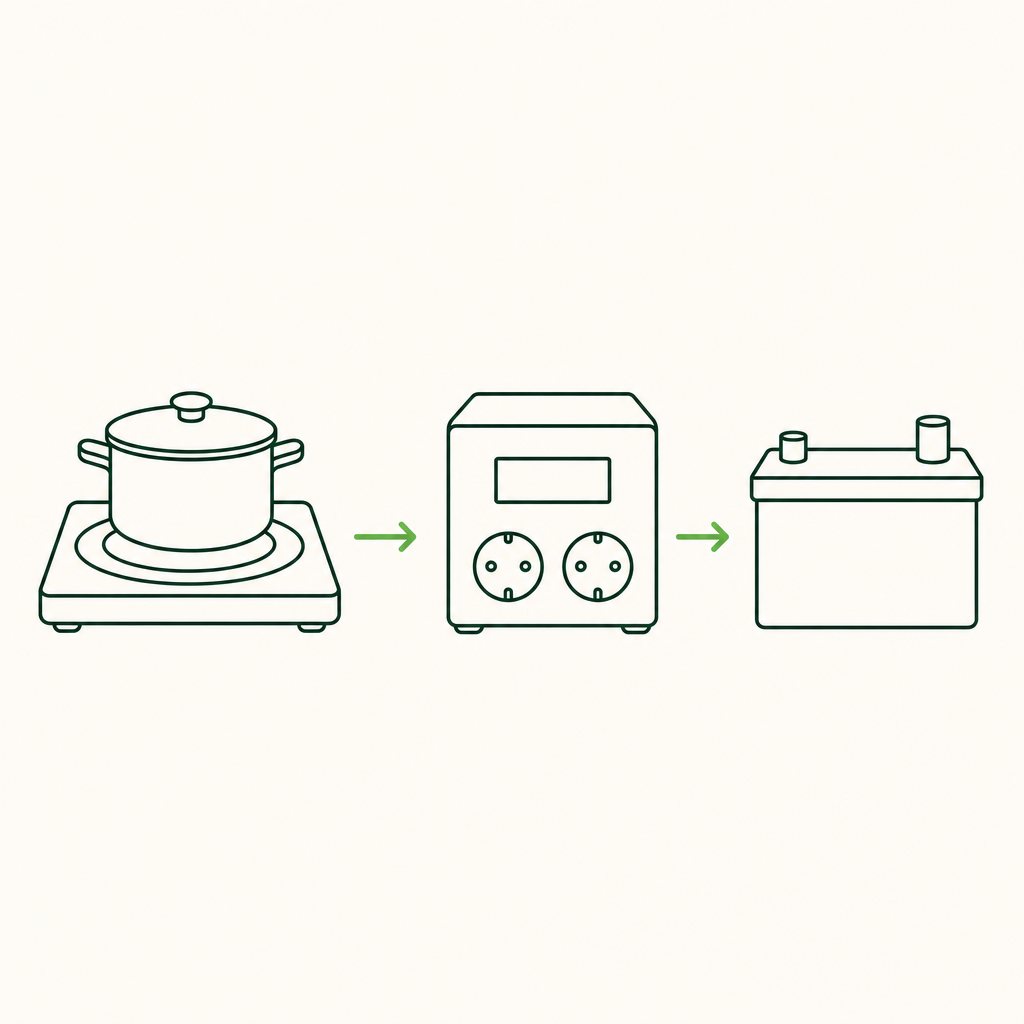
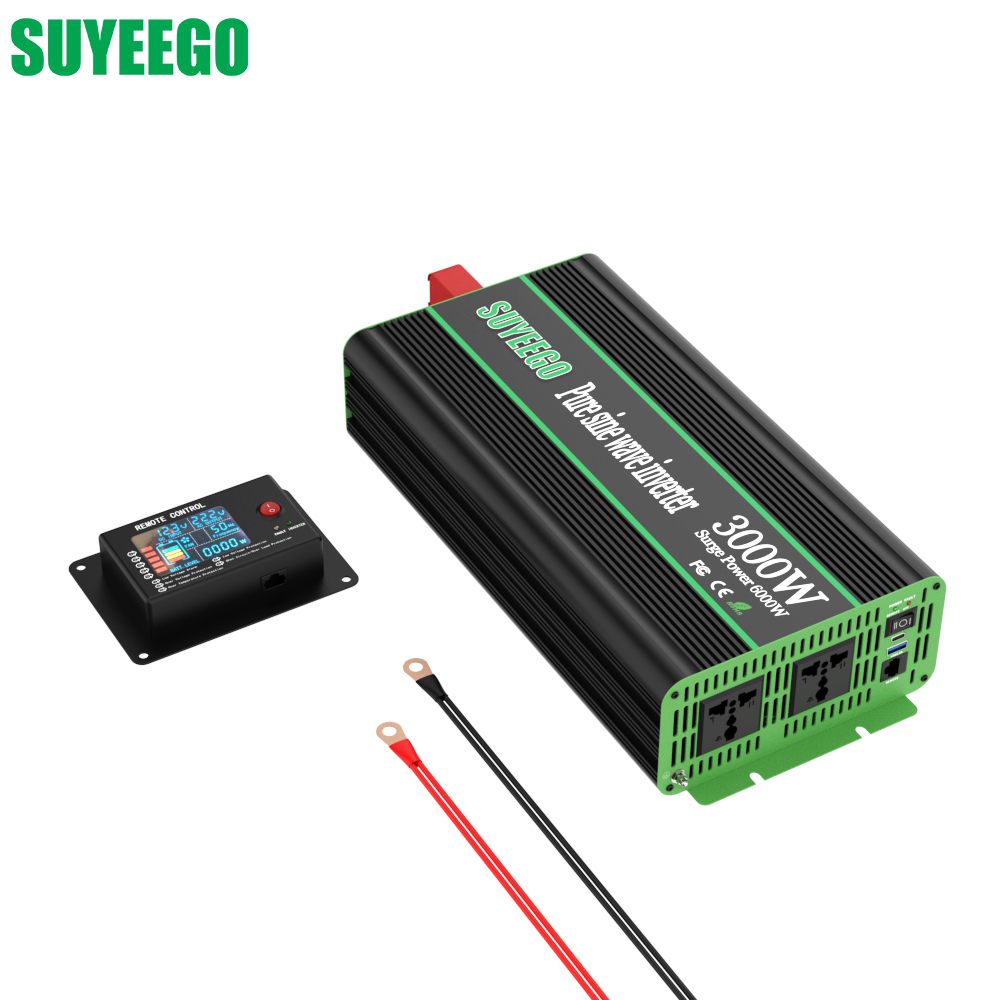
An induction hob is a battery and inverter question rather than a panel question, because the energy arrives in a short burst at high power. A single ring draws on the order of 1.8 kW while it is on, so ten minutes of boiling is roughly 300 Wh — modest against a day's consumption — but the inverter has to supply the full 1.8 kW continuously while it runs, and the battery has to deliver that current without its BMS cutting out.
The energy is small; the power is the problem
Cooking is a short, intense load. An hour of boiling, simmering and frying on one ring might total a few hundred watt-hours, which is less than a compressor fridge takes over a night. Judged purely on energy, an induction hob is one of the cheaper appliances to run.
Judged on power, it is one of the most demanding. The inverter must deliver 1.8 kW or more for as long as the ring is on, and it must do so from a battery that is being asked for a very large current at 12 V.
What that current looks like at 12 V and at 24 V
Power divided by voltage gives current, and inverter losses make the real figure slightly higher. A 1.8 kW load is roughly 150 A at 12 V and roughly 75 A at 24 V, before any efficiency allowance. That is the number that decides whether the installation works, because it is the number the cable, the fuse and the battery's BMS all have to accept.
| Load | At 12 V | At 24 V |
|---|---|---|
| 1,800 W ring | about 150 A | about 75 A |
| 1,200 W ring | about 100 A | about 50 A |
| 800 W kettle | about 67 A | about 33 A |
The BMS is the limit people forget
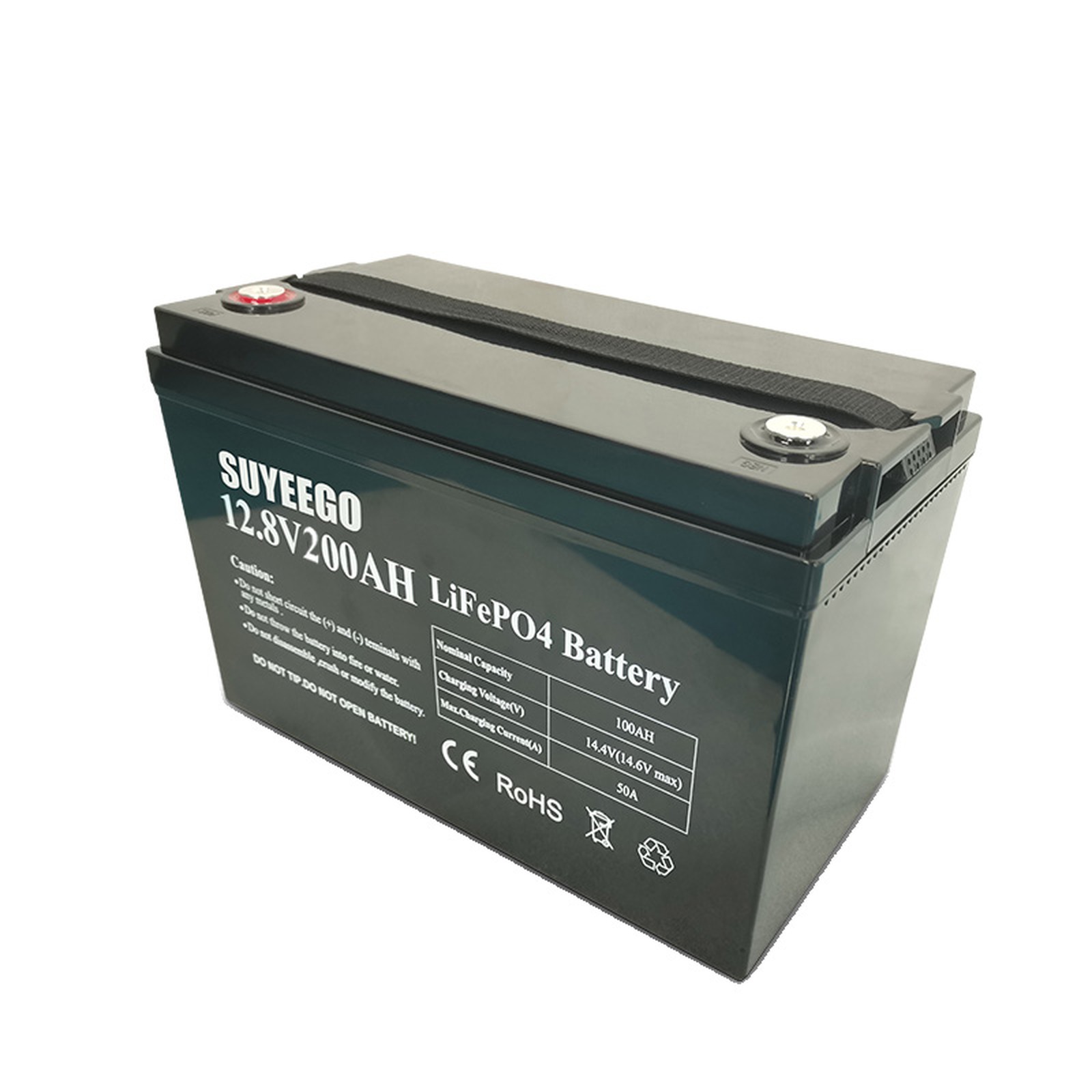
A lithium battery's published continuous discharge current is a limit enforced by its BMS, and when it is exceeded the BMS does not negotiate — it disconnects. The result is an inverter that shuts down mid-boil, which reads like a fault but is actually the protection working.
So the question is not only whether the inverter is big enough but whether the battery will allow the current at all, and for how long. Two batteries in parallel share the current, which is often the cheapest fix.
Worked example
Take a 1.8 kW ring used for ten minutes, twice a day. That is 0.3 kWh each time and 0.6 kWh a day — half the daily consumption of a modest van. Take the same ring used for an hour a day and it becomes 1.8 kWh, which is more than many roof arrays collect in a day in winter.
That contrast is the whole answer: an induction hob used briefly is fine on a well-sized system, and an induction hob used as the main cooking method for an hour every evening is a different system altogether.
What makes it work in practice
- A pure sine wave inverter rated for the continuous load, not the peak
- A battery bank whose BMS allows the current, or two batteries sharing it
- Cable and fuse sized for the current at your system voltage, not for the inverter's rating alone
- A 24 V system if the load is regular, because it halves the current for the same power
- Acceptance that the hob is a short burst, not a background load
Frequently asked questions
- How many watts does an induction hob use?
- A single ring is typically around 1.8 kW to 2 kW on full power, and hobs with several rings total more but rarely run all at once. Use the rating on the appliance you intend to fit rather than this figure.
- Can I run an induction hob on a 12 V system?
- It is possible if the battery's BMS allows roughly 150 A and the cable and fuse are sized for it. At 24 V the same load needs half the current, which is why regular cooking pushes many vans to a 24 V bank.
- Will a 2,000 W inverter run an induction hob?
- Usually for a single ring, provided it is a continuous rating rather than a peak one and the battery can supply the current. A 2,000 W inverter on a battery limited to 100 A will still shut down.
- Is gas simpler?
- Simpler electrically, yes, and it removes the current problem entirely. The trade is fuel handling, ventilation and the fact that gas is not always available where you travel.