
Batteries
The house battery stores the energy your system collects so it is available at night and on cloudy days. LiFePO4 (lithium iron phosphate) batteries accept a deeper discharge, charge faster and last far longer than lead-acid, typically 6000 cycles against a few hundred, and they weigh substantially less for the same usable capacity. Usable capacity, not nominal capacity, is what matters: lithium can be discharged to roughly 90% depth, while lead-acid should not go below 50%.
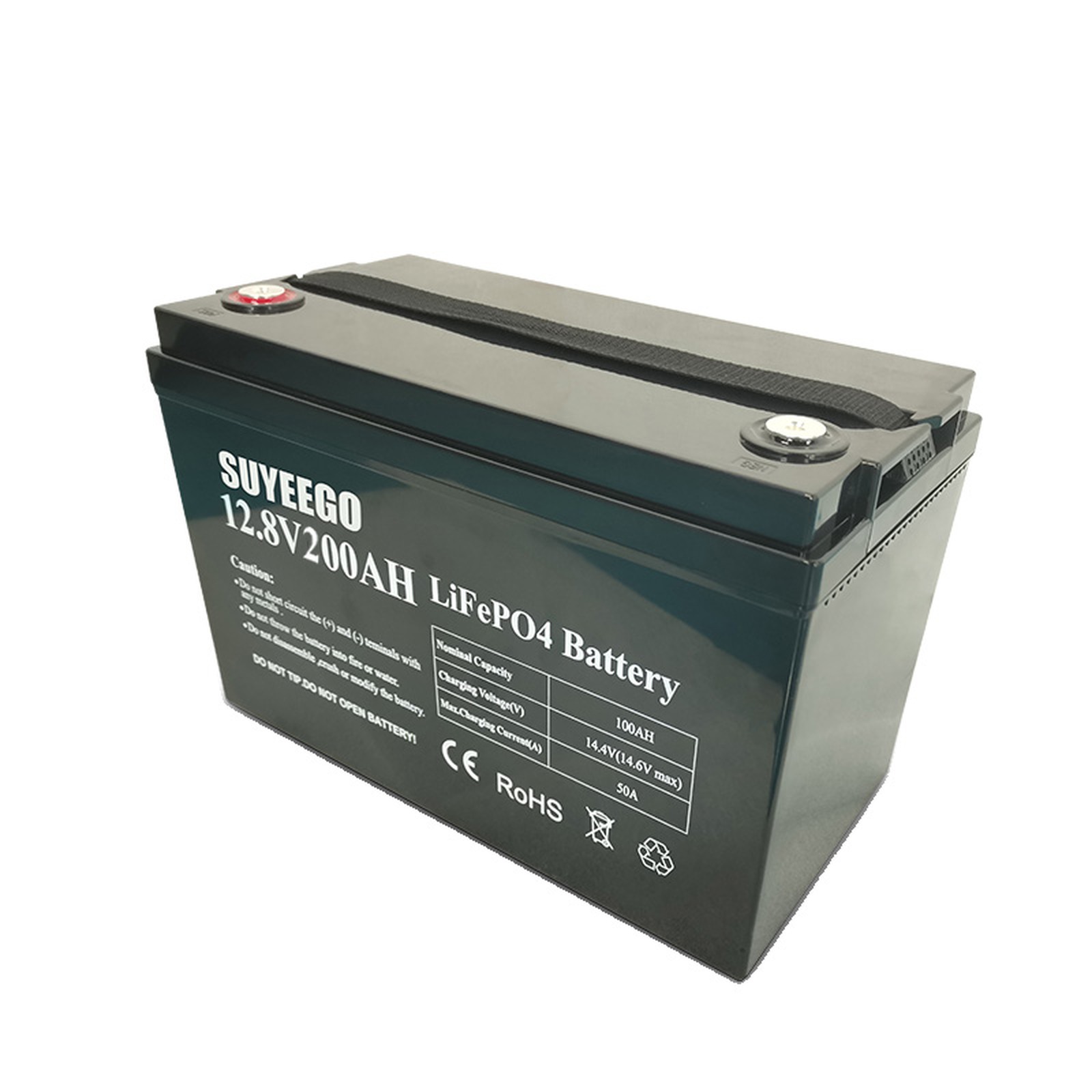
LiFePO4 Battery
View series →12.8V 200Ah (2.56kWh) lithium battery with intelligent BMS and over 6000 cycles.
| Nominal voltage | 12.8V |
|---|---|
| Capacity | 200.0Ah |
| Energy | 2.56 kWh |
| Battery cell | LiFePO4 Grade A+ |
| Max continuous discharge current | 200A |
| Max charging current | 100A |
| Charging voltage / end-of-charge current | 14.40V–14.60V DC / 10A at 25 °C |
| Internal resistance (at 1kHz) | approx. 6 mΩ |
| Cycle life | 6000 cycles at 100% depth of discharge |
| Standby life | 6–10 years |
| Self discharge | can be stored more than 6 months at 25 °C; charge before use |
| Container material | ABS (UL94-HB); UL94-VO available on request |
| Protection rating | IP55 |
| BMS | Intelligent BMS |
| Dimensions (L × W × H) | 525 ±2 × 238 ±2 × 220 ±2 mm |
| Total height | 225 ±2 mm |
| Terminal | M8 |
| Weight | approx. 18.5 kg |
| Discharge temperature | −15 ~ 60 °C |
| Charge temperature | 0 ~ 60 °C |
| Storage temperature | −15 ~ 50 °C |
Source note: The datasheet does not assign a model code; the product is identified by its rating, 12.8V 200AH.
Not sure which to choose?
Send us the vehicle or project details and we will size the system for you — panel wattage, controller rating, battery capacity and inverter size.