Why does an RV inverter interfere with the radio or the TV?
7 min read
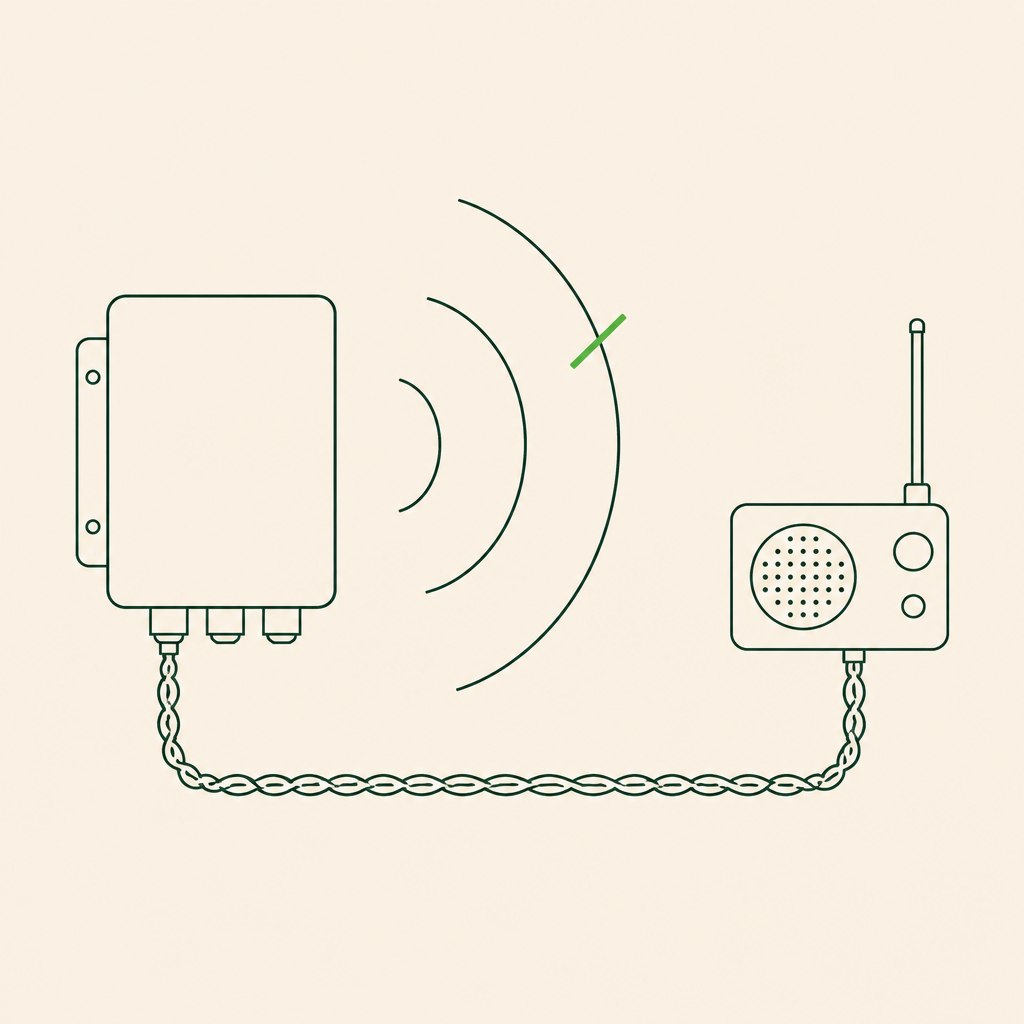
Because an inverter switches thousands of times a second, and every switching edge is a small radio transmitter if the wiring gives it an antenna. Most complaints trace back to the DC cabling and its routing rather than to the inverter's design: long battery cables running alongside aerial or audio cables, or connections that let the inverter's noise ride on the same supply the radio uses. Pure sine wave output describes the AC waveform the appliances see, and it is a separate property from how quiet the unit is electrically.
Where the noise comes from
An inverter turns DC into AC by switching, and the switching edges contain energy across a wide band of frequencies, which is exactly what radio reception is looking for. That energy has to go somewhere. If the DC cables are long and untwisted, they behave as an aerial and radiate; if the inverter shares a supply with the radio, the noise travels along the wire rather than through the air. Both effects grow with the current being drawn, which is why reception is fine with the inverter idling and falls apart when a heavy load starts.
The usual culprits, in order
- Battery cables that run parallel to aerial coax or audio cable, especially over a long distance, because a parallel run couples best.
- A single long, untwisted DC pair from the battery to the inverter, which radiates the switching noise it is carrying.
- Radio or audio equipment fed from a point on the DC system that is electrically close to the inverter, rather than from its own fused feed.
- Two ground paths, such as equipment earthed both through its supply and through its signal cable or its case, which forms a loop the noise can circulate in.
- A weak radio signal. Interference that only appears on distant stations or poor reception areas is telling you the noise was always there, and the signal was masking it.
What removes it
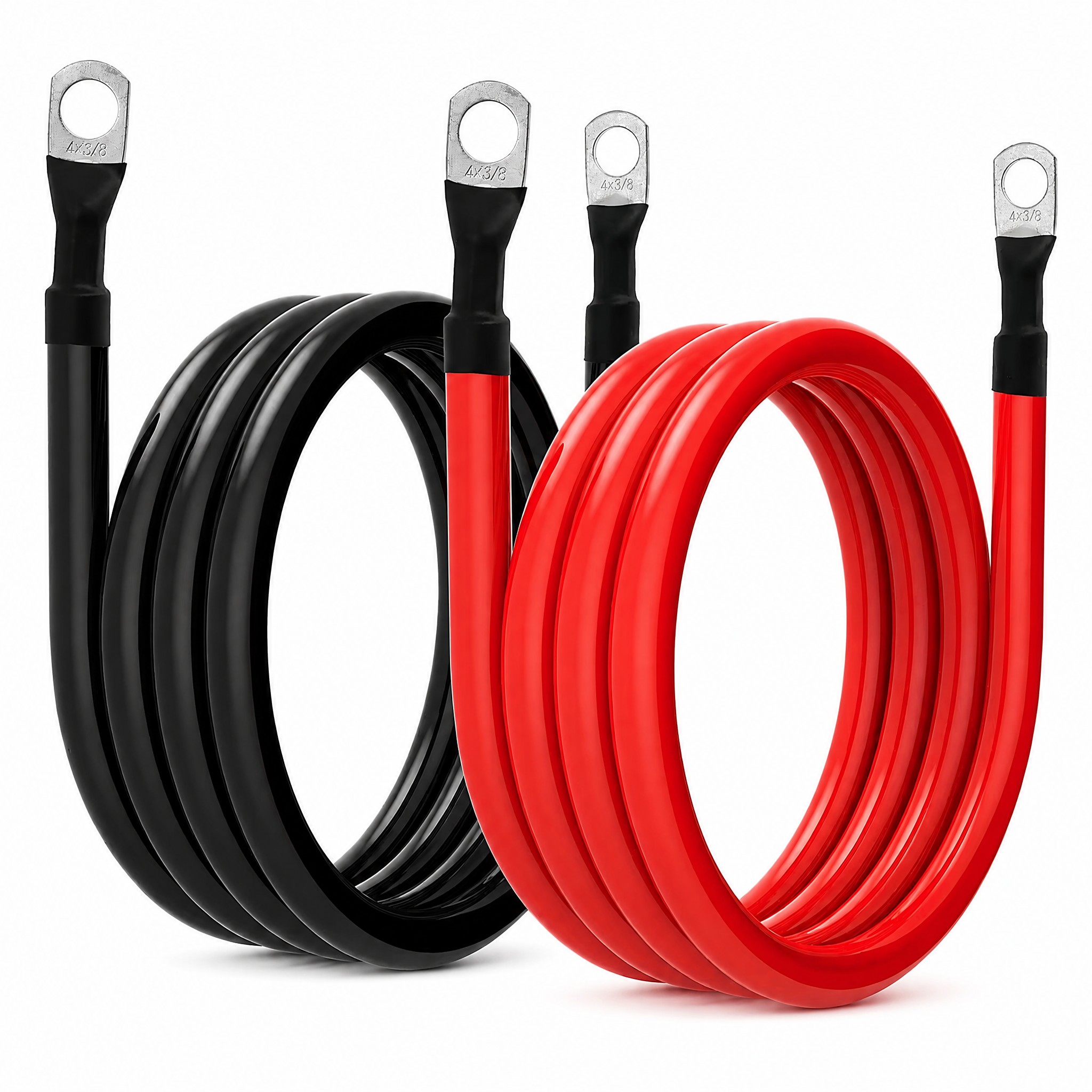
- Shorten the battery-to-inverter run as far as the layout allows, and keep the positive and negative cables together rather than taking separate routes.
- Route signal cables away from DC power cables and, where they have to cross, cross them at right angles rather than running alongside.
- Give the radio or audio unit its own fused feed from the battery, so its supply has as little in common with the inverter as possible.
- Keep one ground reference rather than several, and check that no piece of equipment is earthed twice.
- A clamp-on ferrite around the DC pair, close to the inverter, is the usual treatment where a cable must run near signal wiring. It addresses the symptom, so do the wiring first.
What the range publishes
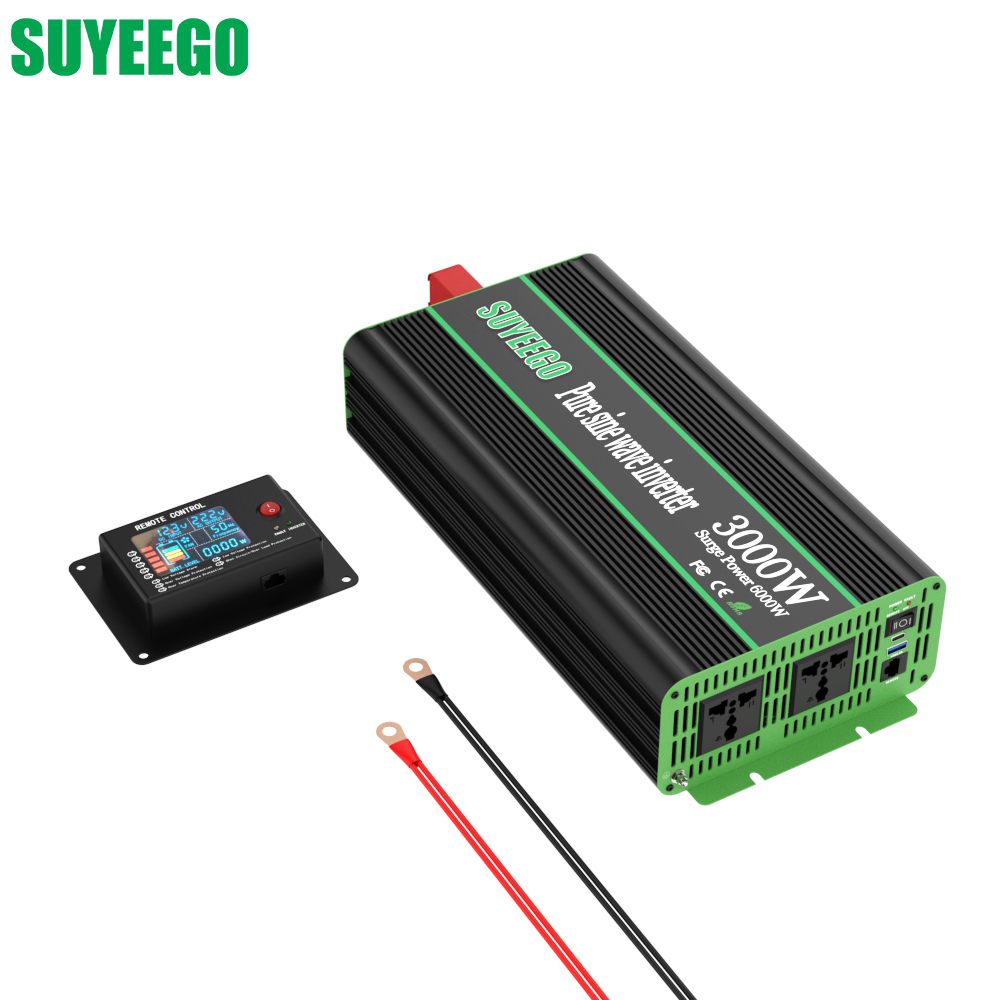
The SYGG-FSC range publishes pure sine wave output, more than 95% efficiency, 12V or 24V input, 110V or 220V output with 50Hz or 60Hz on request, and CE, FCC and RoHS certification. The waveform and the certification are what the specification covers: it does not publish an EMC class or emission figures, so if a particular radio or audio setup is sensitive, tell us what it is and we will look at the individual case rather than quote a number that does not exist.
Frequently asked questions
- Why does the radio only buzz when the inverter is on?
- Because the noise only exists while the inverter is switching, and it grows with the load. Two quick tests separate the paths: hold a battery-powered radio near the DC cables to see whether the noise is being radiated, and run the radio from a separate battery to see whether it is travelling along the supply.
- Does a pure sine wave inverter cause less interference?
- Not by definition. Pure sine wave describes the shape of the AC output that your appliances see; how much the unit radiates or conducts is a different property. A pure sine inverter with careless DC wiring can be noisier on the radio than a simpler one with short, tidy cables.
- Will a filter or ferrite fix the buzzing?
- It can help once the wiring is right, and it is a reasonable last step where a cable has to run close to signal wiring. Fitted first, it tends to mask a routing problem that will show up again the next time something changes.
- Would moving the inverter help?
- Sometimes, because distance and cable length change both the radiated and the conducted path. The cable routing is the part that can be changed on most installations, and it is usually where the interference is coming from.