Can you connect solar panels straight to a DC DC charger?
7 min read
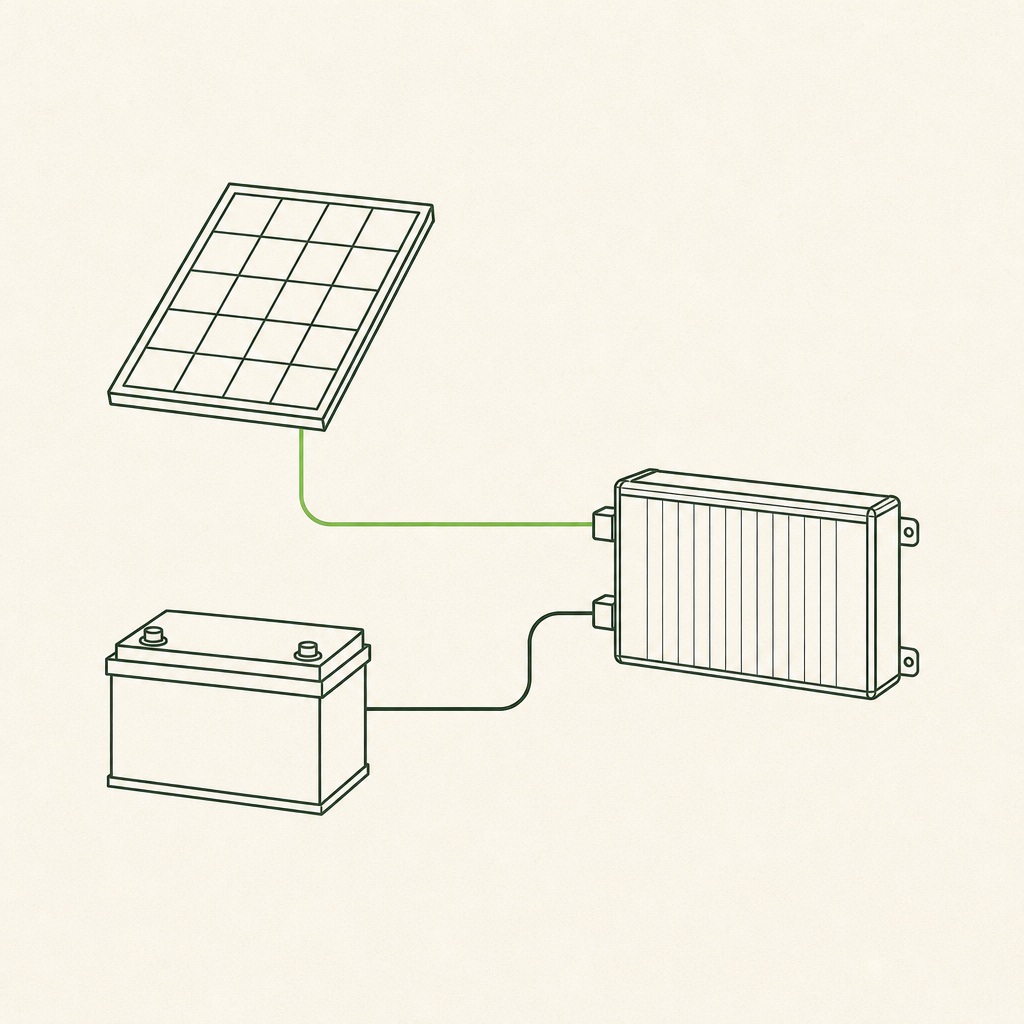
Only if the charger has a solar input of its own, with an MPPT stage behind it. Of our two ranges, the 12V range is an alternator charger: its input is the vehicle side, published at 8 to 16V, and there is no solar input on it. The DD range publishes a separate PV input, with a maximum PV current of 20A or 40A, a maximum PV open-circuit voltage of 80V and voltage-reduction MPPT tracking above 99%. Panels go on the DD range's PV terminals, not on either range's vehicle input.
Two ranges, two different boxes
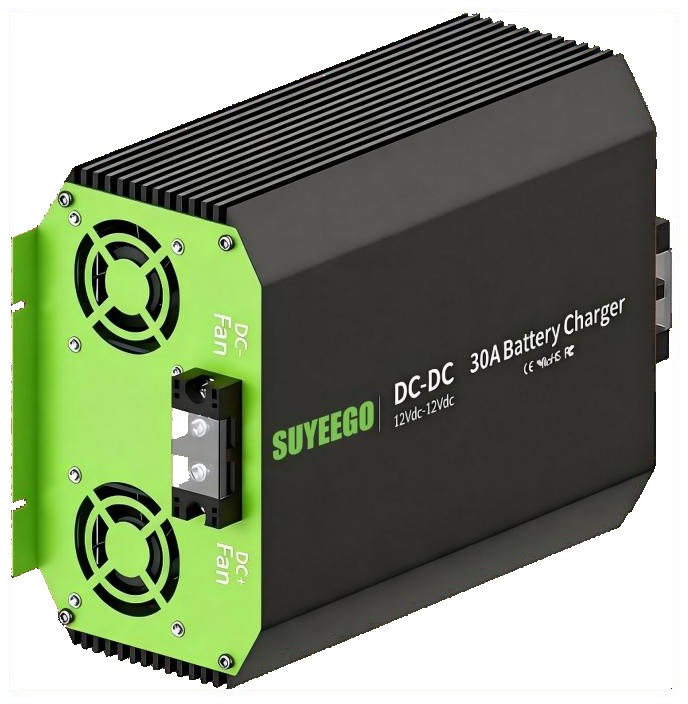
The names invite the confusion. Both are sold as DC DC chargers and both move charge from one DC voltage to another. But only one of them takes a solar array. The 12V range publishes a nominal 12V input with a working window of 8 to 16V, which is the vehicle side: alternator, starter battery, and the voltage that appears at the end of a long cable run from the front of the van.
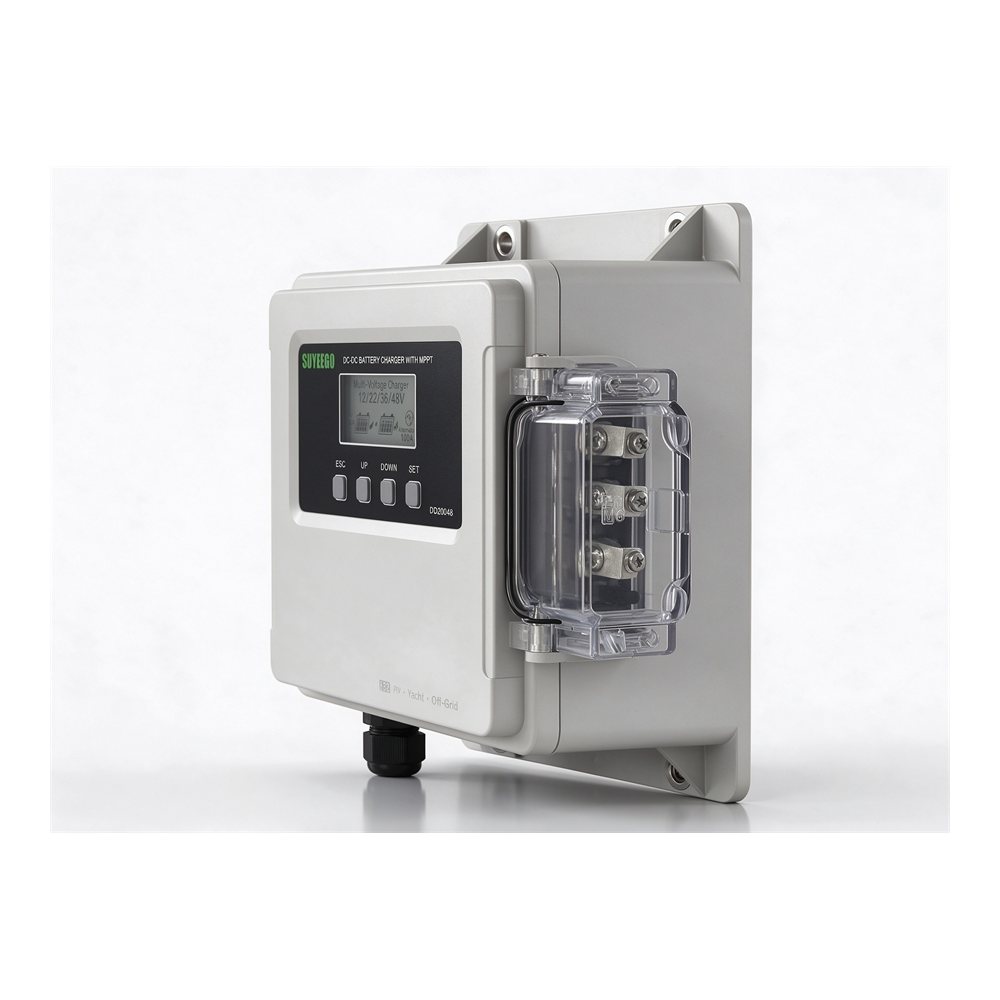
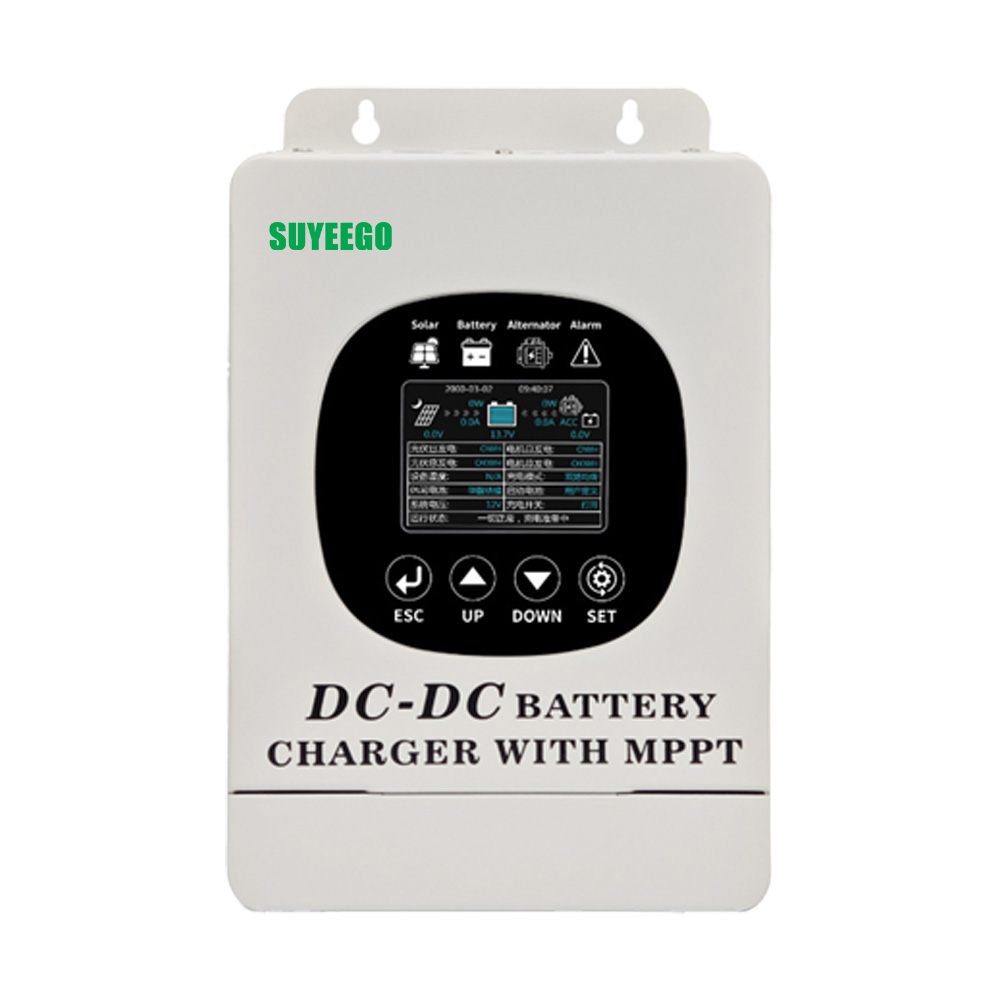
The DD range publishes two inputs. One is the generator side, described in the product data with system voltages of 12, 24, 36 and 48V and a maximum generator input voltage of 80V. The other is a PV input, with its own maximum current, its own voltage ceiling and its own MPPT stage. They are separate sets of terminals, not one input that accepts either.
Why a panel cannot go into the vehicle input
The vehicle input on the 12V range is published as a window from 8 to 16V. A solar array's open-circuit voltage is not set by nominal voltage but by the panel and by how many are in series: a string chosen for an MPPT controller will sit far above a 16V ceiling, which is the same reason a controller is fitted between the panels and the battery in the first place.
There is a second reason. An MPPT controller works by loading the array to a voltage it chooses, then converting down. The vehicle input has no such stage: it expects a source that holds a roughly steady voltage and it converts from there. A panel is not that source, and the box has no way to chase its maximum power point.
What the DD range's PV input asks of the array
- Open-circuit voltage of the whole string must stay under the published 80V maximum, counted at the temperatures where a panel produces its highest voltage rather than at room temperature.
- Array current must stay within the published maximum PV current for the model, 20A or 40A.
- The tracking figure is quoted above 99%, so the array is being driven rather than simply connected.
- The PV side is also what the product data uses to maintain the starting battery, publishing a charging current of 10A or 20A for it.
Running the panels and the alternator at once
Because the DD range has both inputs, it can accept solar and generator current in the same charging session rather than making you choose. That is a different arrangement from two separate devices feeding one bank, and it is the reason this range exists in the line at all: the solar side is not a bolt-on, it is a second input with its own converter.
What the two inputs do when they meet is governed by the charging stages, not by the panels. Neither input is a fixed source pushing current in regardless; the charger decides what the battery receives. That is also why a modest array does not fight a large alternator.
What we do not publish
We do not publish a recommended array size for either model, a temperature coefficient for the voltage ceiling, or a table of how much of the published PV current is available at a given state of charge. We also do not publish an input-voltage margin figure. Where those numbers matter to a design, they have to come from the panel datasheet and from the array's own string calculation, not from us.
Frequently asked questions
- Can I put a solar panel on the vehicle input of the 12V range?
- No. That input is published at 8 to 16V for the vehicle side and has no MPPT stage behind it. A panel string sized for an MPPT controller will exceed that window, and the unit has no way to hold the array at its maximum power point.
- Does the DD range need a separate solar controller?
- No, not for the array connected to its PV terminals: the MPPT stage is published as part of the unit, with tracking above 99% and a maximum PV open-circuit voltage of 80V. Adding an external controller in front of that input would be a second conversion stage doing the job already inside the box.
- How much solar can the DD range take?
- The product data publishes a maximum PV current of 20A or 40A depending on the model, and a maximum PV open-circuit voltage of 80V. It does not publish a wattage figure or a recommended array size, because the usable power depends on the array's voltage under load rather than on a nominal rating.
- Will the solar side keep the starter battery topped up?
- The product data publishes a PV charging current for the starting battery of 10A or 20A, with the starter battery type given as lead acid. So the vehicle battery can be maintained from the solar side while the leisure bank is being charged.