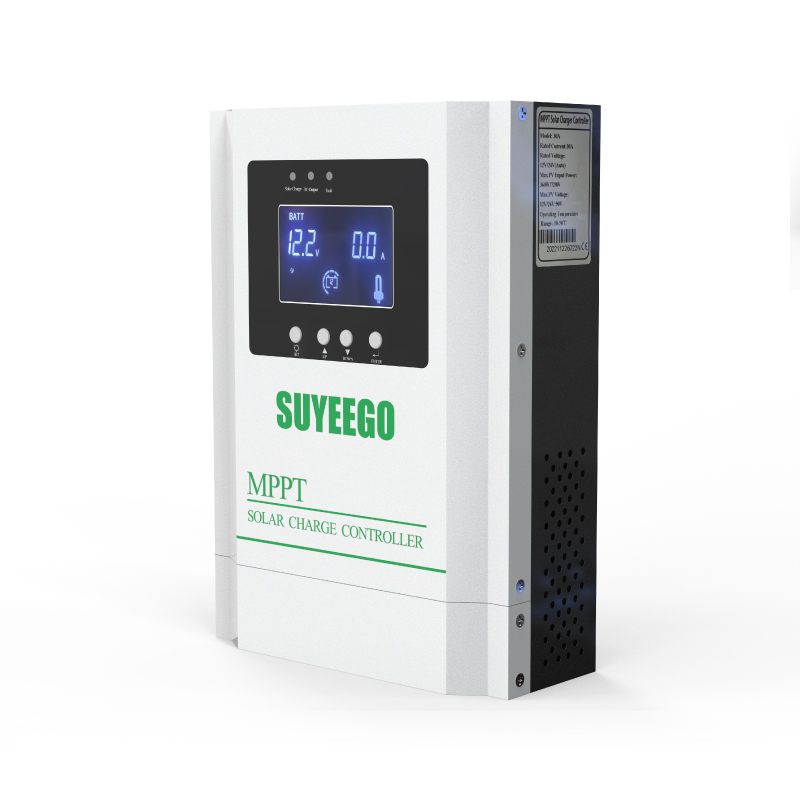
Does an RV MPPT solar charge controller need a fan?
4 min read
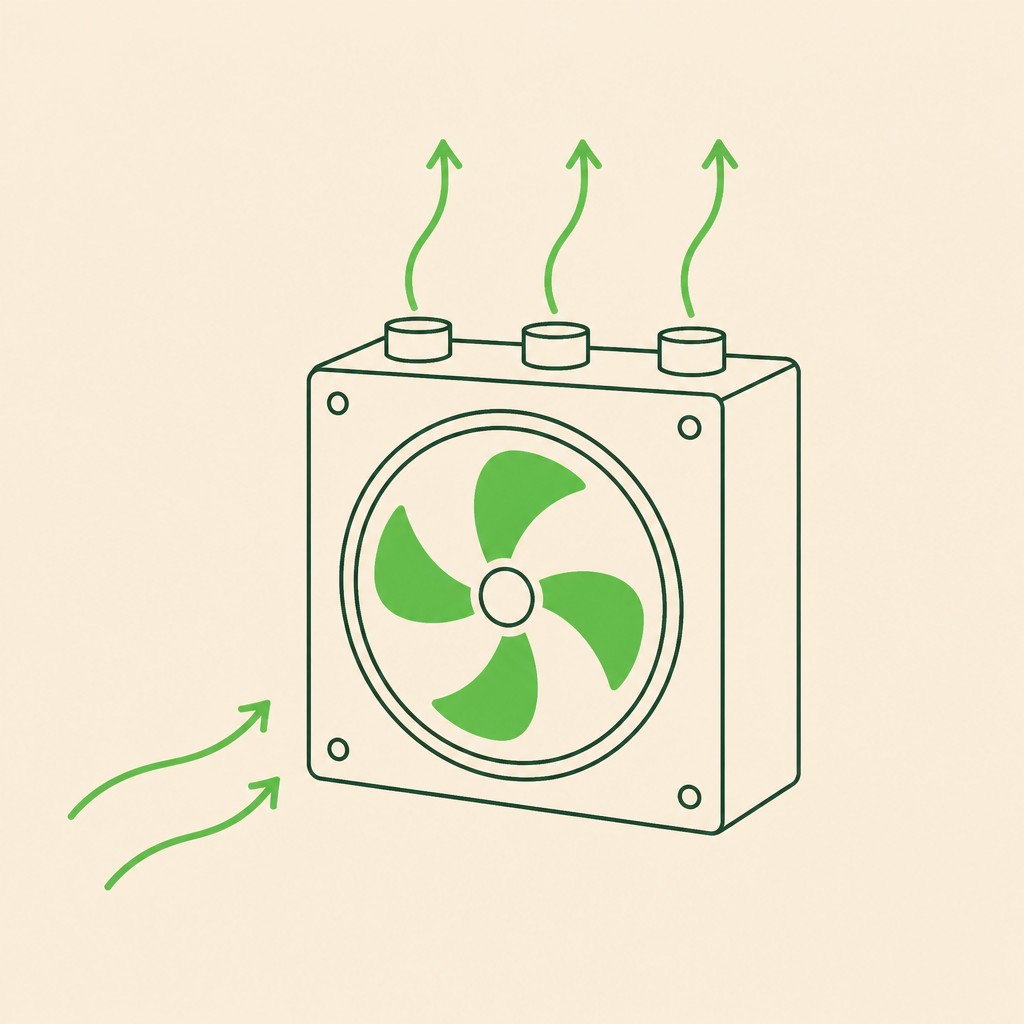
Ours are fan cooled across the whole range, from the 20A model to the 100A model. A fan is not a sign of a badly designed controller; it is what you get when a unit is asked to handle high current in a compact box, because the conversion is not lossless. Our published conversion efficiency is 98%, which means that at high output the remaining couple of per cent leaves as heat and has to go somewhere.
Where the heat comes from
A 98% conversion efficiency sounds close to lossless, and at low current it effectively is. The number that matters is what is left over in watts. Two per cent of a large throughput is a meaningful amount of heat, and it is the reason the larger models in the range are both heavier and fan cooled rather than relying on the case alone.
| Model | Published weight | Heat dissipation |
|---|---|---|
| 20A, 30A | 1.5 kg | Fan cooling |
| 40A, 60A, 80A | 4 kg | Fan cooling |
| 100A | 10 kg | Fan cooling |
The weight figures track the amount of hardware inside. A 10 kg unit is not a 1.5 kg unit in a bigger box; it is a different class of device with a correspondingly larger amount of heat to move.
What the fan needs from the installation
A fan moves air, so it needs air to move. The failure mode is almost never the fan itself; it is a controller installed in a sealed compartment, or with its vents pressed against a wall or buried under bedding.
- Leave clear space on the vented faces. Do not mount the unit with its grille against a surface.
- Do not seal the controller inside an airtight box. If it must live in a locker, the locker needs some ventilation.
- Mount it so the outgoing warm air is not immediately drawn back in. In a confined space the fan will otherwise recirculate its own exhaust.
- Keep the run of cable to the battery short if you can. Long cable runs add voltage drop and heat of their own, and the controller is not the only thing in the circuit that warms up.
The published temperature range
Our published operating temperature is −15 °C to 65 °C, with humidity of 0–90% relative humidity and no condensation. The 65 °C figure is the environment the unit is rated to work in, not a temperature the case should reach in normal operation. If the space around the controller is approaching that, the problem is the installation rather than the weather.
What we do not publish
We do not publish a derating curve for the controller at high ambient temperature, and we do not publish a noise figure for the fan. If either of those matters for your installation — for example, if the controller is going to sit near a sleeping area and you want to know whether you will hear it at night — ask us rather than inferring from the cooling method.
Frequently asked questions
- Is fan cooling worse than a passive heatsink?
- Not in itself. A fan moves more heat than a passive case of the same size, which is why high-current models generally use one. The practical difference is that a fan depends on airflow, so the installation has to leave its vents clear, and dust needs checking occasionally.
- Can I mount the controller in a sealed battery locker?
- It needs some ventilation to work as designed. Our range is fan cooled and the published operating range runs to 65 °C, so a sealed compartment that traps the exhaust air will push the unit warmer than the ambient temperature. If it has to sit in a locker, leave a path for air.
- How hot should the controller get in normal use?
- We do not publish a case temperature figure or a derating curve, so we cannot give you a number to compare against. What is published is the operating temperature range of −15 °C to 65 °C and the humidity limit of 0–90% without condensation. If you are unsure whether your installation is within those, ask us before installing.