Will sodium-ion batteries replace LiFePO4 in a camper van?
6 min read
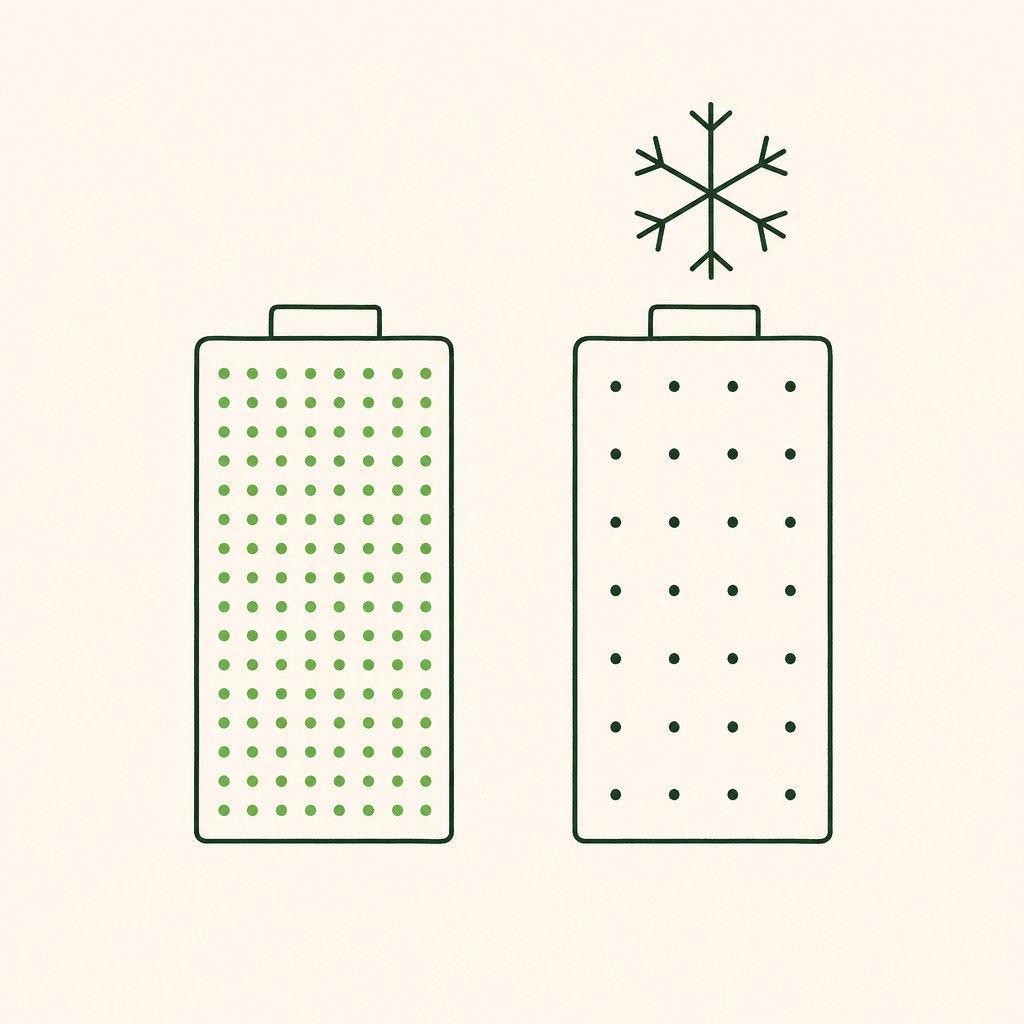
Not yet, and the reason is energy density rather than price. Sodium-ion cells store less energy per kilogram than LiFePO4, so the same usable capacity takes more space and more weight, which are the two things a camper conversion has least of. What sodium-ion offers instead is better behaviour in the cold and a raw material that is abundant. For a 12V leisure system today, LiFePO4 remains the mature choice: published cycle life, charging profiles that chargers already support, and a wide supply of finished batteries. Sodium-ion is worth watching, and worth considering for a cold-climate build once finished products, not just cells, are established.
The trade-off in one line
Sodium-ion and LiFePO4 are both lithium-free-of-cobalt chemistries aimed at deep-cycle storage, and they differ in where the compromise falls. Sodium-ion gives up energy density — the amount of energy stored for a given weight and volume — in exchange for better cold behaviour and a cheaper, more abundant raw material. For a van, that trade is awkward, because weight and volume are exactly what a conversion is short of.
- Energy per kilogram: lower than LiFePO4. Published comparisons put commercial sodium-ion cells below LiFePO4, and the exact figure varies by cell and supplier.
- Cold charging: the real advantage. Sodium-ion cells tolerate charging at temperatures where LiFePO4 will not, and the workaround LiFePO4 needs in winter is a heater or a warm compartment.
- Raw material: sodium is abundant and the cells avoid lithium and cobalt, which is the basis of the cost argument.
- Maturity: cell production is real, but finished 12V batteries with a documented BMS, a charge profile and long-term spares are far less common than their LiFePO4 equivalents.
What matters in a van is not the cell
In a van you do not buy a cell chemistry, you buy a finished battery: cells, a battery management system, a case, terminals and a warranty. The chemistry decides how much energy fits in the box; the BMS decides whether the battery is safe and predictable, and it is the part that has to handle over-charge, over-discharge, over-current and temperature. A cell-level advantage does not become a better leisure battery until somebody has built the rest of it properly.
- Check the charge profile the pack expects, and whether your controller or charger can be set to it.
- Check the published operating and charging temperature windows, not only the storage range.
- Check the cycle life figure and the depth of discharge it is quoted at.
- Check that spares and support will still exist in five years, which is when a bargain becomes an orphan.
Where sodium-ion would win first
The chemistry suits installations where weight and volume matter less than temperature and price: static storage in a cold place, large banks that sit on a floor, and price-sensitive projects that can accept a bulkier box. A van is the opposite case on almost every count, which is why sodium-ion leisure systems are more likely to appear first in cold-climate stationary use than in a conversion where every kilogram is counted.
How the two compare for a 12V system
| What matters | LiFePO4 | Sodium-ion |
|---|---|---|
| Energy per kilogram | Higher, so less weight and less space for the same capacity | Lower, so a bigger or heavier pack for the same capacity |
| Charging below freezing | Not on a standard pack: it needs the heater option or a warm compartment | The chemistry's main advantage |
| Raw material | Lithium and cobalt in the supply chain | Sodium is abundant and cheap |
| Charge profile support | Widely supported by controllers and chargers | Harder to match to equipment already installed |
| Finished 12V products | Wide choice with documented BMS and warranties | Limited, and specifications vary |
The figures the range publishes
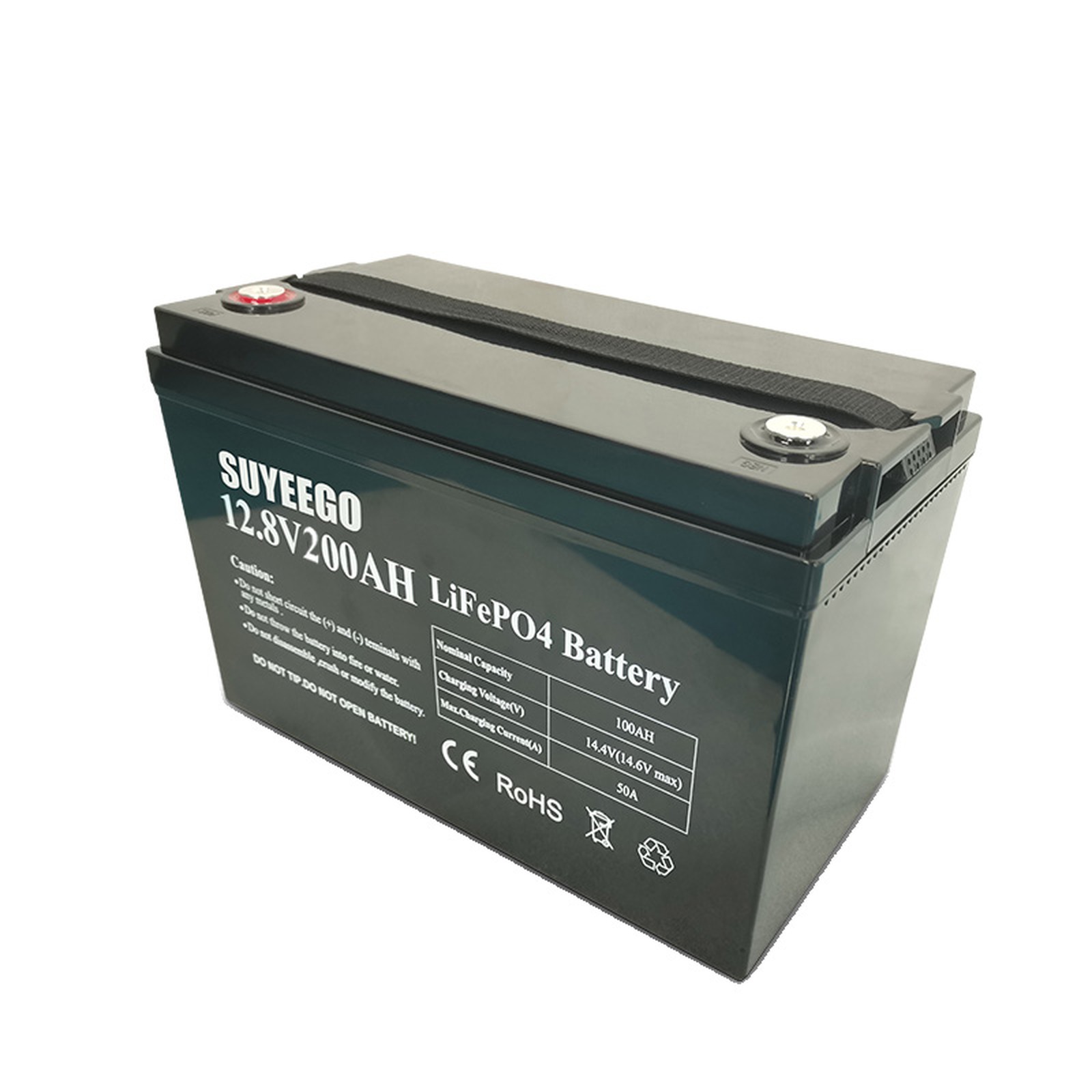
SUYEEGO's 12.8V 200Ah LiFePO4 battery stores 2.56kWh, is rated for 200A of continuous discharge and accepts up to 100A of charging current at 14.40V to 14.60V, with end-of-charge at 10A at 25 °C. Its published windows are 0 °C to 60 °C for charging, −15 °C to 60 °C for discharge and −15 °C to 50 °C for storage; it is quoted for 6000 cycles at 100% depth of discharge and measures 525 × 238 × 220 mm at about 18.5 kg. Those are the numbers any alternative chemistry has to match on weight and volume to be a straight swap in the same compartment.
Frequently asked questions
- Are sodium-ion batteries safe?
- What matters in a van is the same as with any lithium battery: the BMS has to protect the cells against over-charge, over-discharge, over-current and temperature. A product without a documented BMS is not a product to build a system around, whatever the cell chemistry.
- Can I charge a sodium-ion battery below freezing?
- That is the headline advantage of the chemistry. Sodium-ion cells tolerate charging at temperatures where LiFePO4 does not, since LiFePO4 must not be charged below 0 °C. The exact limit depends on the cell and on the BMS inside the pack, so the pack datasheet is what matters rather than the chemistry in general.
- Will sodium-ion be cheaper per kWh?
- The material argument points that way, because sodium is abundant and the cells avoid lithium and cobalt. Whether the price of a finished 12V battery falls depends on manufacturing scale and on the BMS and case around the cells, and those prices are not settled yet.
- Should I wait for sodium-ion?
- Only if cold-weather charging is your limiting problem. If the reason to wait is price, the cost of a season without a working system is usually larger than the saving, and the equipment around the battery would have to be chosen again anyway.